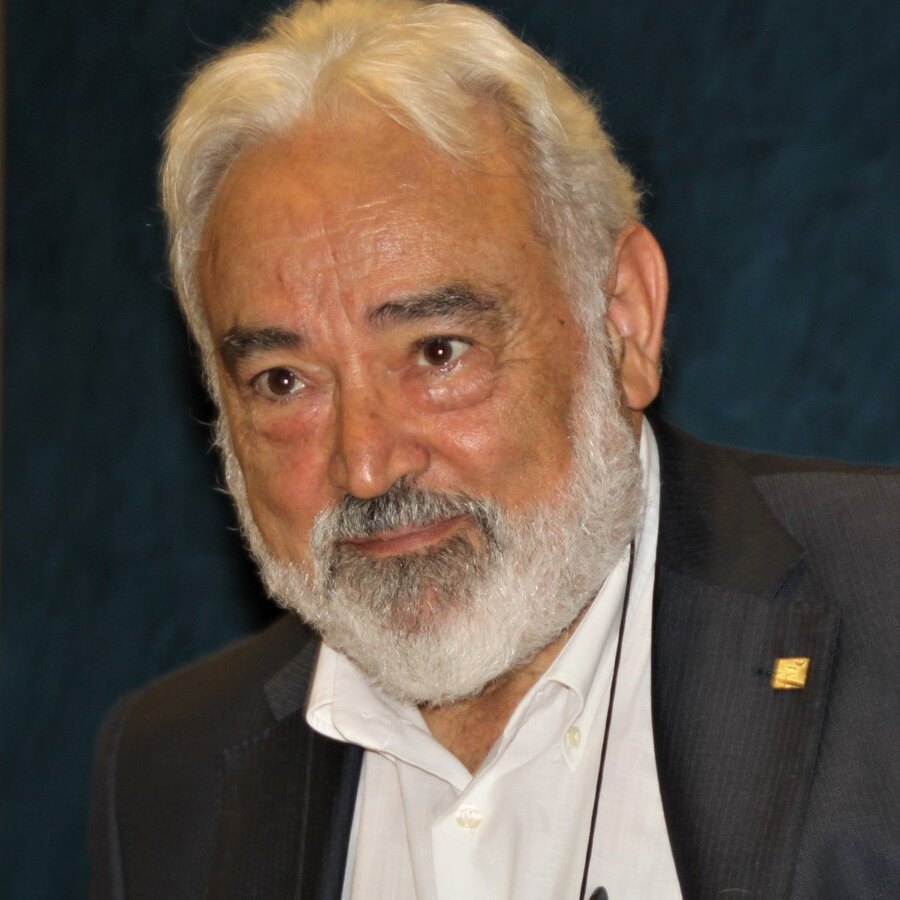
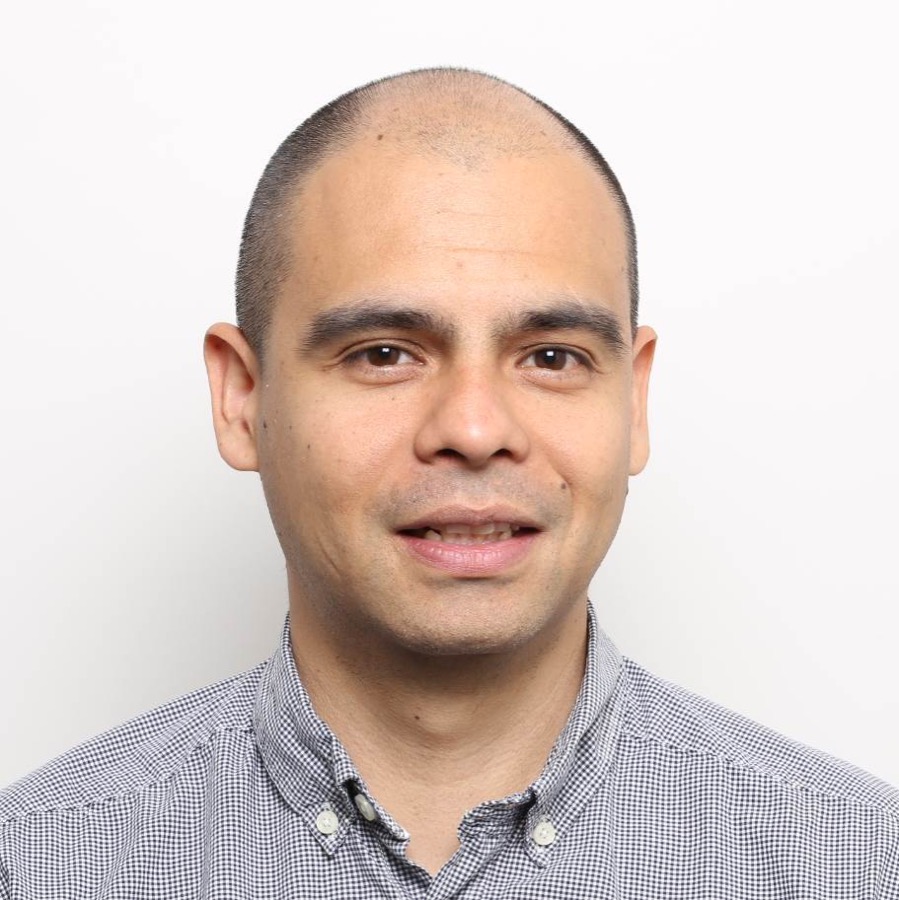
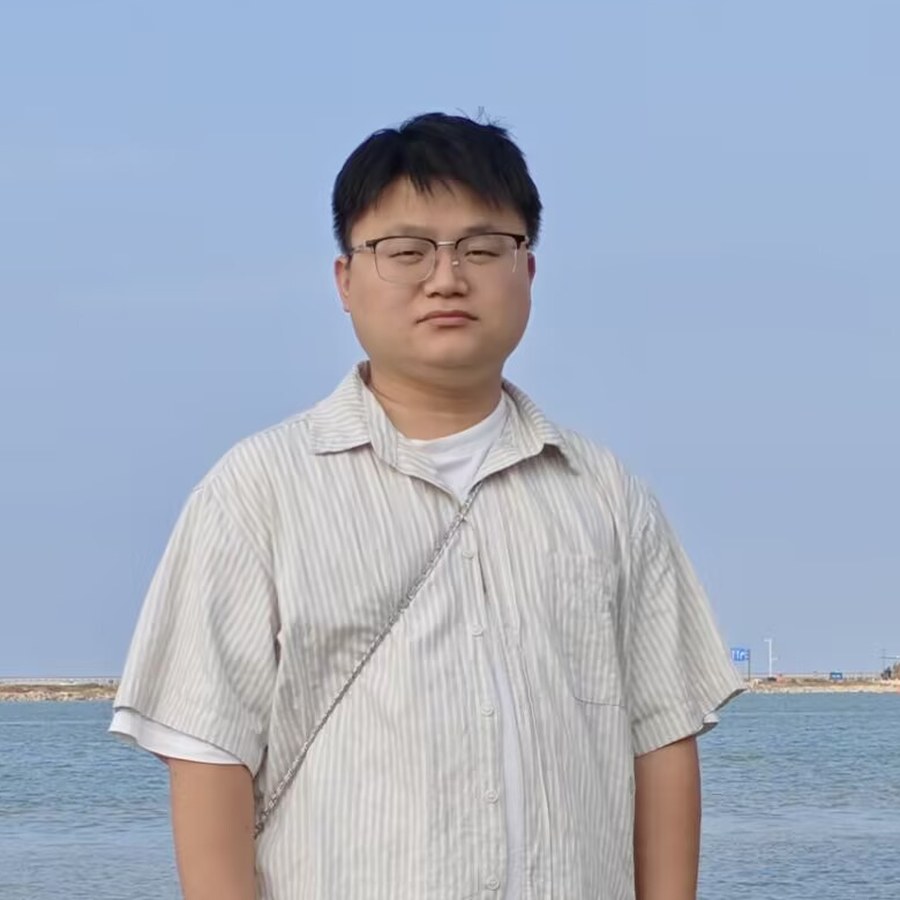
Full Professor in the Electrical Engineering Section at the University of Almería. His research connects geometric algebra, power theory, power quality, smart metering, smart grids and optimization methods for energy systems.
Associate Professor at the Institute of Mathematics, Faculty of Mechanical Engineering, Brno University of Technology. His research focuses on geometric algebras, especially PGA and CGA, with applications in mathematical robotics, manipulator and CNC machine control and calibration, quantum computing and geometric control theory.
Assistant Professor at the Institute of Mathematics, Faculty of Mechanical Engineering, Brno University of Technology. He earned his PhD in 2024 with a thesis on algorithms for conics in geometric algebras. His research spans image processing, geometric algebras and projective geometry, especially Geometric Algebra for Conics, and he is now focusing on problems linking image processing, AI and classical geometric techniques.
PhD student at the Institute of Mathematics, Faculty of Mechanical Engineering, Brno University of Technology, under the supervision of Prof. Jaroslav Hrdina. He earned his master's degree in Theoretical Physics in 2025 at the Faculty of Science, Masaryk University. His current work applies projective geometric algebra to volumetric precision, robot kinematics and possibly quantum computing.
Mathematician trained at Masaryk University in Brno and the University of Vienna, where he earned a Ph.D. in differential geometry. His work spans mathematics with potential applications, with particular interest in algebraic methods in geometry, geometric control theory and quantum computing. Outside mathematics, he enjoys sports, camping and beer.
PhD researcher at the University of Ferrara with an International Master's degree in Mathematics associated with ICTP, Trieste. She completed a research mobility stay at Brno University of Technology under the supervision of Prof. Jaroslav Hrdina, working on robotic arm calibration. Her research interests include geometric deep learning, machine learning and deep-learning methods for robotics and data analysis.
Physicist and software engineer with experience developing large-scale Java and NetBeans desktop applications, Dr. Oliver Rettig later moved into biomechanics and completed a PhD on arm movements during walking in an orthopedic context. Since 2017 he has been a researcher at DHBW, working at the intersection of biomechanics, collaborative robotics and Geometric Algebra. He applies GA to real-world robotics problems, contributes to Gaalop enhancements and is developing a Truffle/GraalVM-based domain-specific language for efficient implementation of optimal-control methods formulated in GA.
Researcher at the University of Almería working on smart-grid laboratories, power quality instrumentation and experimental validation of time-domain methods for electrical circuit identification.
Doctoral student at the Institute of Mathematics, Faculty of Mechanical Engineering, Brno University of Technology. She earned her Ing. in 2023 with a thesis on the use of conformal geometric algebra in omnidirectional camera image analysis. Her research uses CGA and PGA in quadratic programming, power-system engineering and, increasingly, problems connecting geometric algebras with classical image-processing techniques.
Professor at the School of Geography, Nanjing Normal University, and head of the Yangtze River Delta Pilot Station for the UN Ocean Decade CoastalPrediction program. His research focuses on coastal-zone information modelling, scenario-based geographic information systems and quantum geographic computing, connecting spatial information science with advanced computational methods for complex geographic systems. He has led national-level projects, published more than 200 papers and received multiple provincial, ministerial and national industry science and technology awards.
Predoctoral researcher in Electrical Engineering at the University of Almería, supported by a competitive national fellowship and supervised by Francisco G. Montoya. His work uses Geometric Algebra and Differential Geometry to study power theory, current compensation, and fault detection and classification in modern renewable and inverter-dominated grids.
Researcher at the University of Almería working on engineering instrumentation, smart metering, power quality and energy systems. His work connects experimental measurement platforms with geometric modelling of electrical quantities and signal behaviour, providing an applied bridge between smart-grid instrumentation and Geometric Algebra methods for power-system analysis.
Emeritus Full Professor of Mathematics at the Universitat Politècnica de Catalunya, Facultat de Matemàtiques i Estadística. His work spans algebraic geometry, coding and information theory, computational methods, mathematical models in physics and engineering, and geometric calculus; his workshop contribution presents a geometric-algebra approach to Morley's theorem.
Santiago Sánchez-Acevedo received B.Sc. and M.Sc. degrees in electrical engineering from Universidad Tecnológica de Pereira, Colombia, in 2006 and 2008, and a Ph.D. in electric power engineering from the Norwegian University of Science and Technology (NTNU) in 2015. He joined NTNU in 2016 as a Postdoctoral Research Fellow working on interoperability of high-voltage DC transmission systems. Since 2019 he has been a Research Scientist with SINTEF Energy Research in Trondheim, working on power-system stability, HVDC transmission, digital substation laboratory analysis, validation of cyber-physical power systems and cybersecurity.
Computer scientist undertaking a PhD in applied mathematics and high-performance computing, with a focus on Geometric Algebra algorithms.
Ph.D. researcher in Cartography and Geographic Information Systems working on natural language-driven spatial computing, intelligent Geometric Algebra modelling and high-performance GIS analysis. His current research uses large language models to translate geometric and geospatial tasks into compilable, optimizable GA programs for heterogeneous CPU/FPGA acceleration.
Theoretical physicist at International Christian University in Tokyo, teaching physics and mathematics. He received his Dr. rer. nat. from the University of Konstanz and has authored or coauthored more than 100 peer-reviewed papers. His research spans pure and applied Clifford geometric algebras, Clifford analysis and quaternions, and he has helped organize major geometric algebra workshops and conferences.
Computer scientist trained at TH Darmstadt who worked for more than 12 years in industry before earning his PhD at TU Darmstadt on geometric computing in computer graphics and robotics using conformal geometric algebra. He has held lecturer, researcher and professor positions, developed GAALOP with his students, and continues research in Geometric Algebra Computing, now with a focus on quantum computing based on Geometric Algebra.