1 - Fundamentals of microalgae-based processes.
1.5 - Types of photobioreactors
- Overview
We will now look at examples of real PBRs. Beyond mere curiosity, it is important to know the morphology and geometry of the different PBRs, as these affect aspects such as light distribution and gas exchange, and the following lessons would make less sense without some concrete examples.
To structure the information, we will classify them into two broad groups:
-
OPEN PBRs: Characterised by keeping the culture in contact with the environment. The design philosophy is that they are cheap, large and inefficient. This strategy works for many microalgae species. They are suitable for low-value products such as biofertilisers, biofuels, wastewater treatment or biogas.
-
CLOSED PBRs: Keep the culture (relatively) isolated from the environment. They are more expensive to install due to their greater complexity, but they have higher productivity and can cultivate weak or temperature-sensitive strains. They are generally suited to obtaining high-value products such as pigments, fatty acids or biomass for high-quality aquaculture.
I have used the open/closed PBR classification because it is the most traditional. Although it might make more sense to classify PBRs by their geometry. In that case we would also have two groups:
-
PBRs with flat geometry
-
PBRs with cylindrical geometry
We will now show some of these PBRs. The list is not exhaustive but presents all the geometrical elements needed to understand the problem. Pay attention to the geometry of each PBR with respect to light propagation.
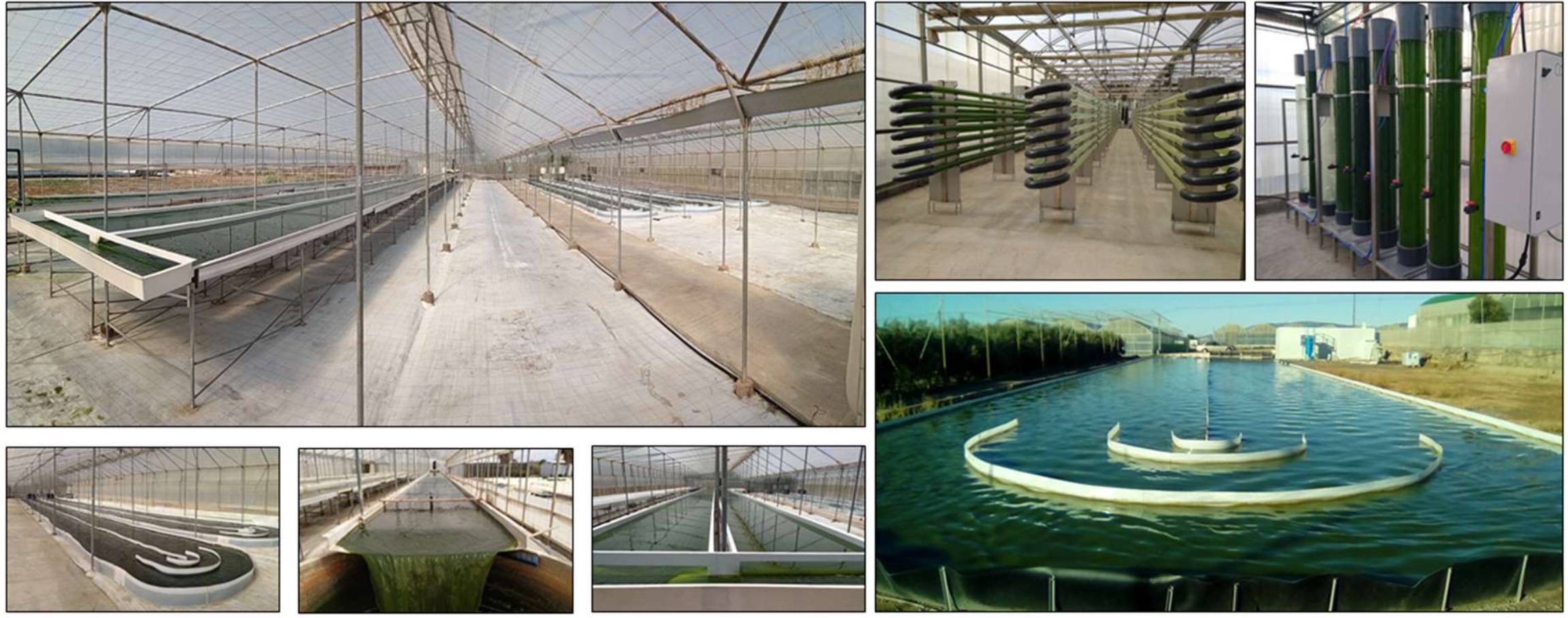
- Open photobioreactors
These systems have the following characteristics:
- Large systems
- Low biomass concentration
- Cheap installation
- Poorly controlled
- Little control over biomass
- Only suitable for resistant species
As mentioned, these systems have the advantage of being cheap. Although they are not very productive, this can always be compensated by making the PBR larger. Three fundamental types can be found:
Open ponds
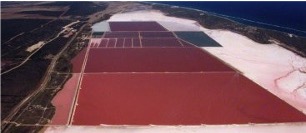 Open pond for Dunaliella salina cultivation
These are the simplest systems. They have no moving parts. They simply allow microalgae to grow without further intervention. Of course, they are very limited systems due to their poor control, and can only be used in special situations such as:
- Cultivation of Spirulina
- A cyanobacterium that grows at very high pH.
- Uses ammonium as source, poorly tolerated by other species.
- Resistant to unfavourable environmental conditions.
Spirulina is very rich in proteins and is an excellent source of SCP (single cell protein) suitable for human consumption, and has prevented famines in parts of Africa where it grows in lakes used as Open Ponds. Its resistance to ammonium and high pH (>10) is exploited to prevent contamination.
- Cultivation of Dunaliella salina
- Production of -carotene
- Halotolerant
- High luminosity and salinity favour the process
Dunaliella salina is a microalga that tolerates salt concentrations above 100 g/L, which protects it from invasion by other species. It is also highly resistant to high temperatures and light intensity. Dunaliella salina can accumulate up to 5% -carotene in its biomass and has long been used in the production of this ubiquitous colourant for human food (found in milkshakes, butter/margarine, dairy desserts, etc.).
In summary: the use of Open Ponds can be profitable for species adapted to very extreme environmental conditions.
Raceways: RFBRs
"Raceway"-type PBRs (RFBRs) are the most widely used type of open outdoor photobioreactor.
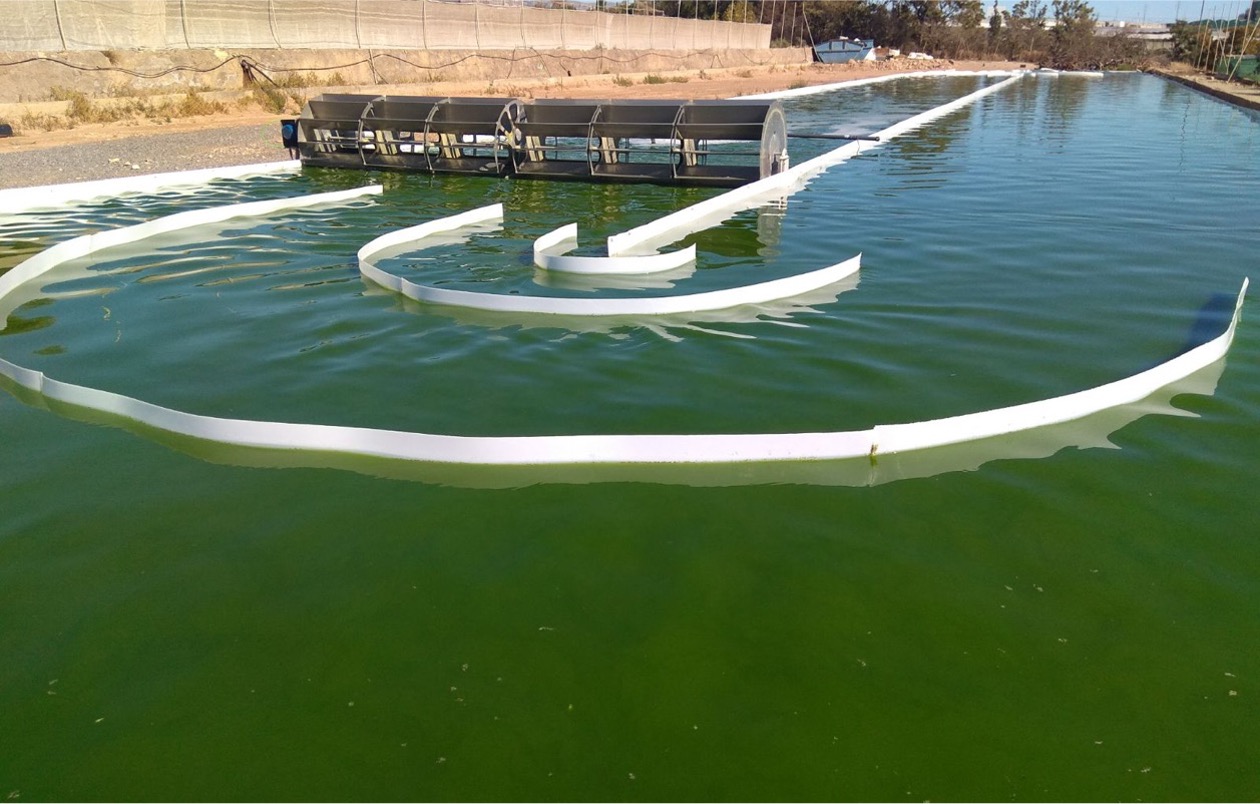 Raceway pond for microalgae cultivation
Unlike Open Ponds, Raceways have all the culture support elements mentioned for laboratory PBRs:
-
Mixing: facilitated by a paddle wheel that drives the culture, promoting homogenisation, elimination of gas and nutrient concentration gradients, and preventing microalgae sedimentation.
-
Nutrient supply: Thanks to their pumping and mixing capacity, RFBRs can operate continuously, with continuous medium addition and simultaneous harvesting.
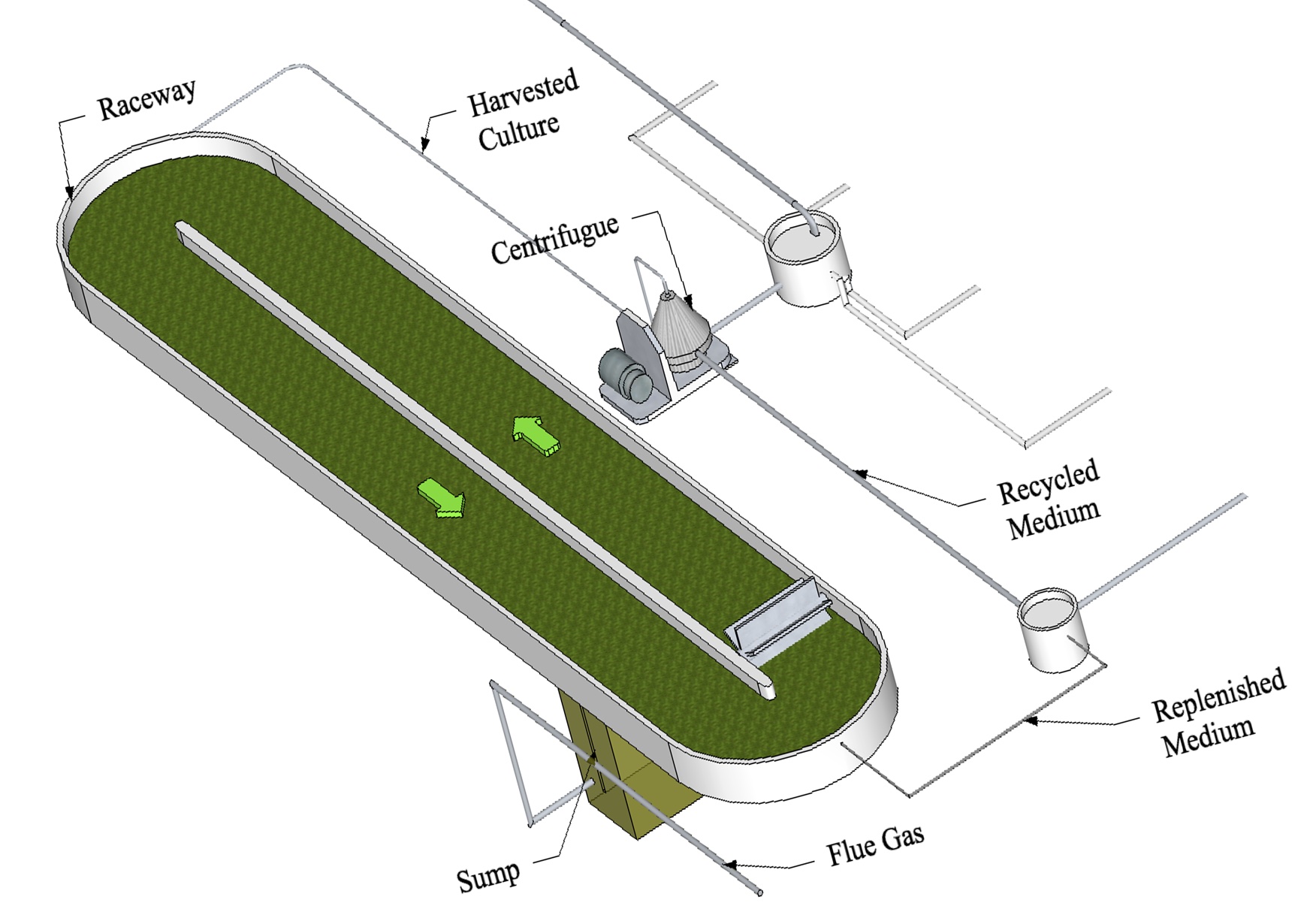 Raceway with gas exchange sump
- Gas exchange
- RFBRs can be equipped with gas exchange systems.
- The most commonly used device is known as the "sump", a pit structured as a downcomer channel and a riser channel.
- In the sump, air can be injected for oxygen desorption and/or for carbonation.
- The sump volume, analogous to the degasser volume , is calculated so that it can desorb/carbonate according to the needs of the optimised RFBR.
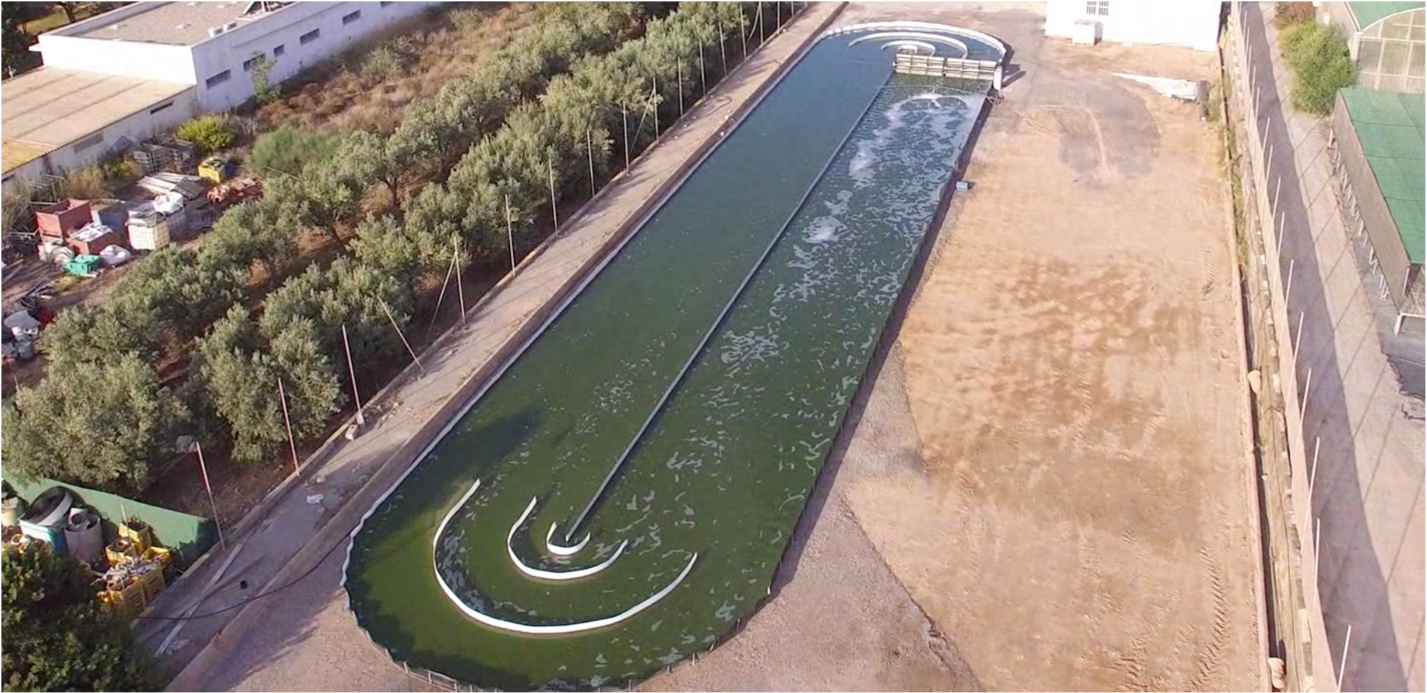
Raceway-type PBRs have a typical depth of 15–20 cm and can be built with capacities of hundreds of . The image below shows a 50 Raceway.
Thin-Layer photobioreactors (TLFBRs)
"Thin-layer" photobioreactors are the evolution of Raceway-type PBRs. The RFBR cannot operate with culture layer heights below 12 or 15 cm, as it is impossible to make the fluid circulate. TLFBRs are designed to operate with fluid layers of 1–2 cm.
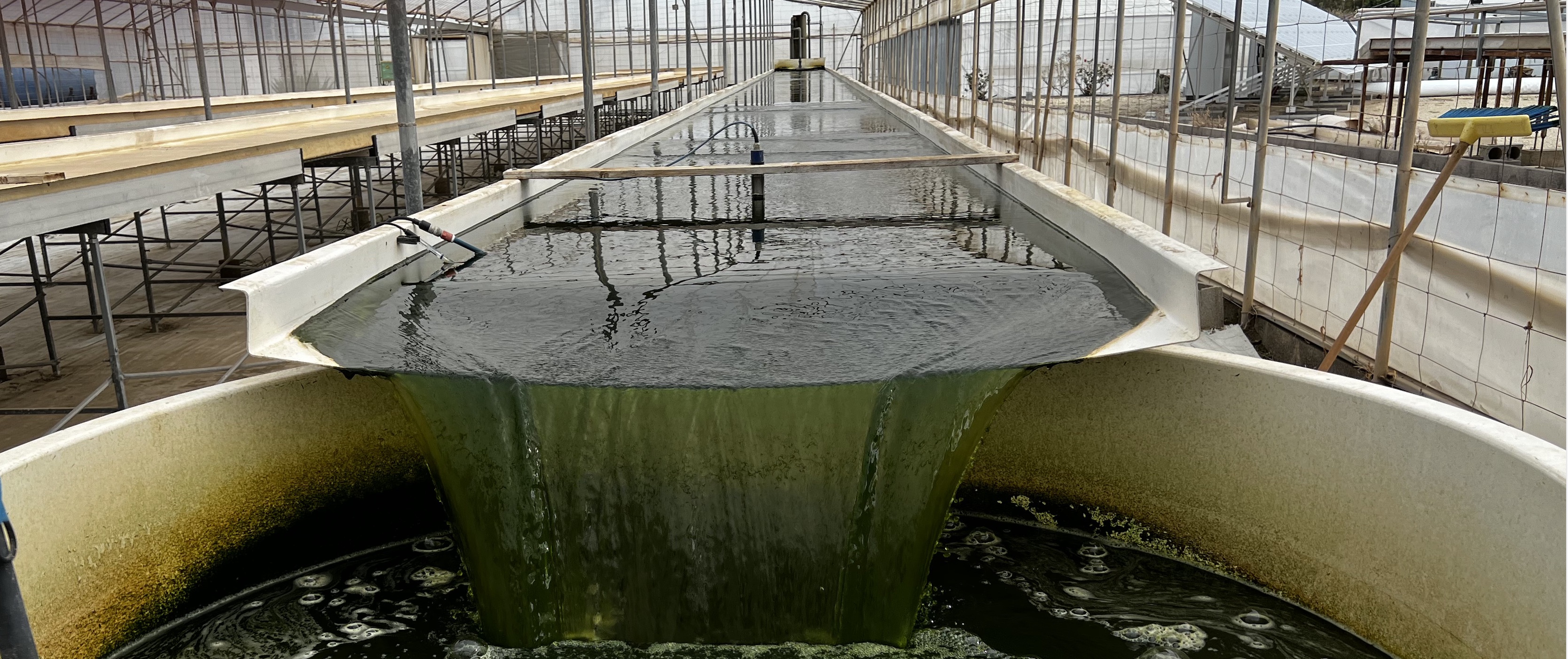
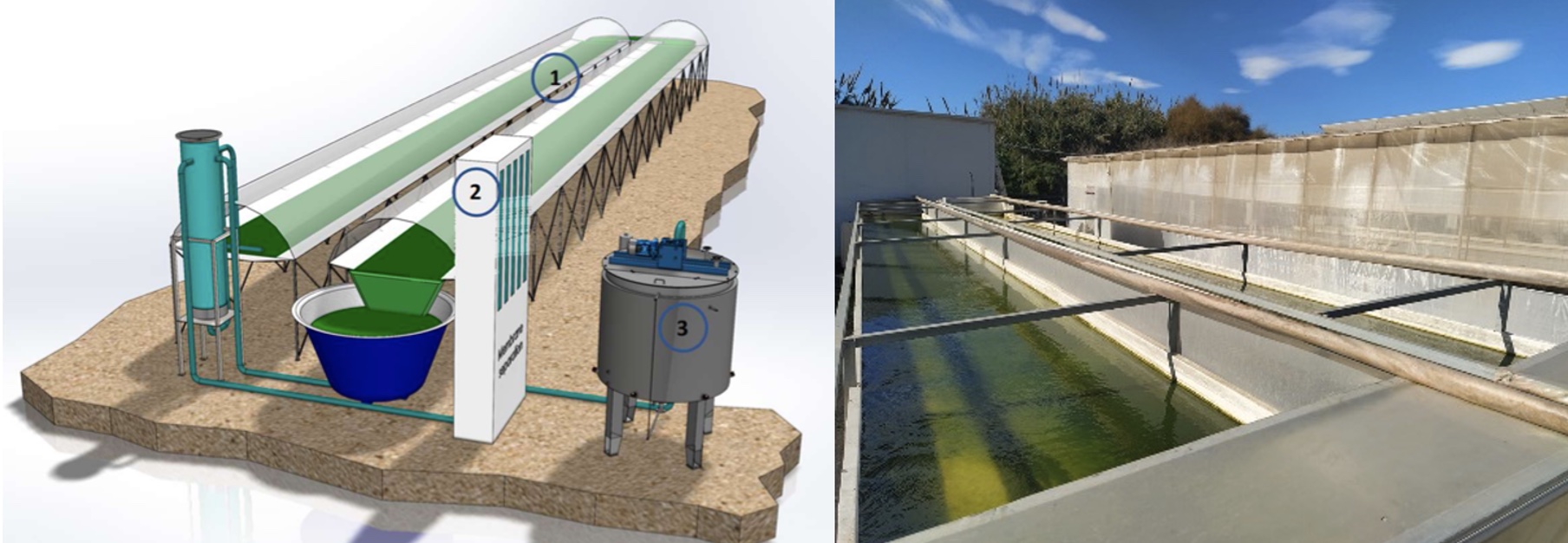
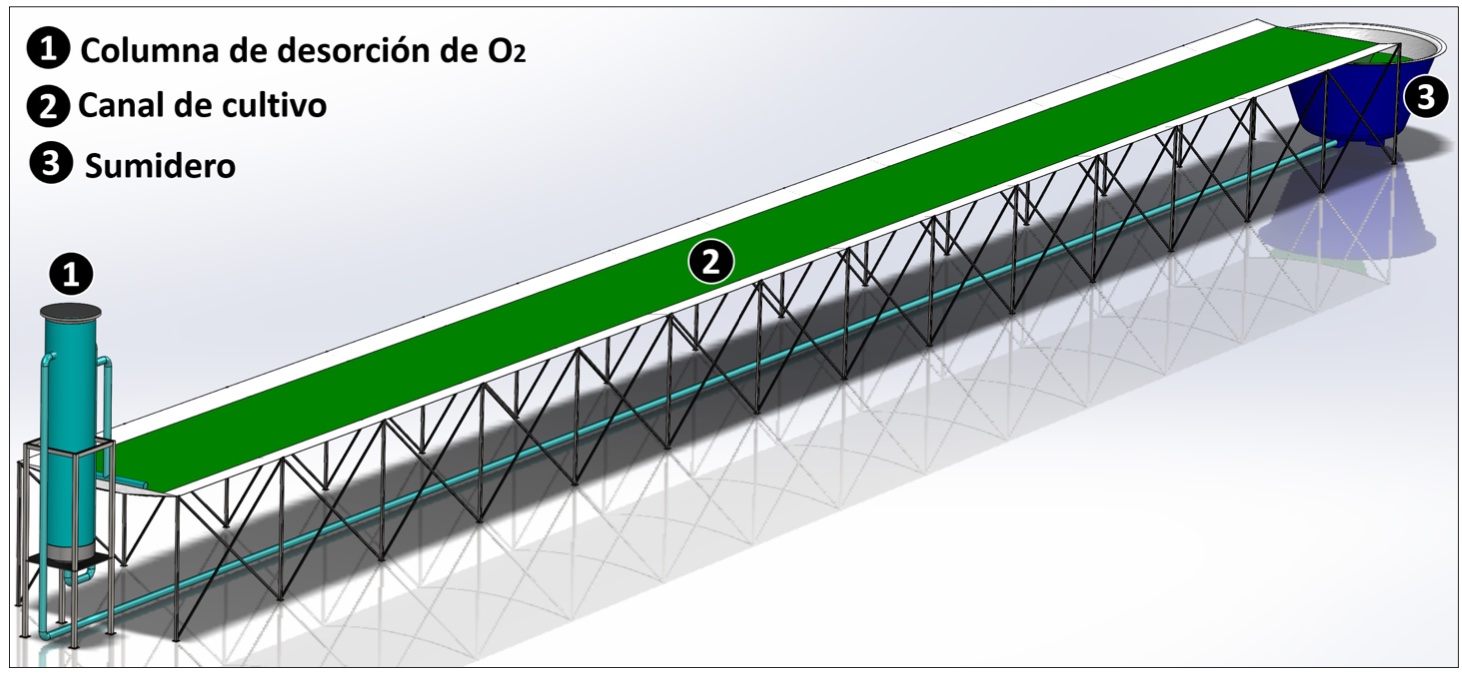 Components of a TLFBR.
This results in the following advantages:
- Smaller culture volume: savings in pumping costs.
- Higher biomass concentration: lower harvesting costs.
- Better vertical mixing: increased photosynthetic efficiency.
- More stable cultures resistant to contamination due to their high cell density.
TLFBRs can be built covered (not closed), which protects them from rain, fauna and insects, and from the fall of earth, dust and environmental dirt.
The partial cover can also be designed to reflect infrared radiation and thus limit temperature, and to moderate evaporation, reducing water losses.
Due to their smaller culture volume, they can be equipped with a degasser/carbonator (column or tank) and heat exchangers for temperature control.
- Closed photobioreactors
As already mentioned, closed PBRs keep microalgae reasonably isolated from the environment, making monoalgal cultures of slow-growing strains possible. Their advantages are:
- Rigorous control of environmental conditions
- Contamination-free cultures
- Possibility of cultivating a wide range of species
- Reproducible cultivation conditions yielding homogeneous and consistent products over time.
Traditionally, closed PBRs are classified into two types:
-
Vertical PBRs: Bubble columns and flat-panel PBRs.
-
Horizontal PBRs: Also called tubular (although columns are also "tubes", they do not fall into this category). Their main characteristic is that they have two distinct parts:
- Loop: a horizontal tube section designed for photosynthesis to take place.
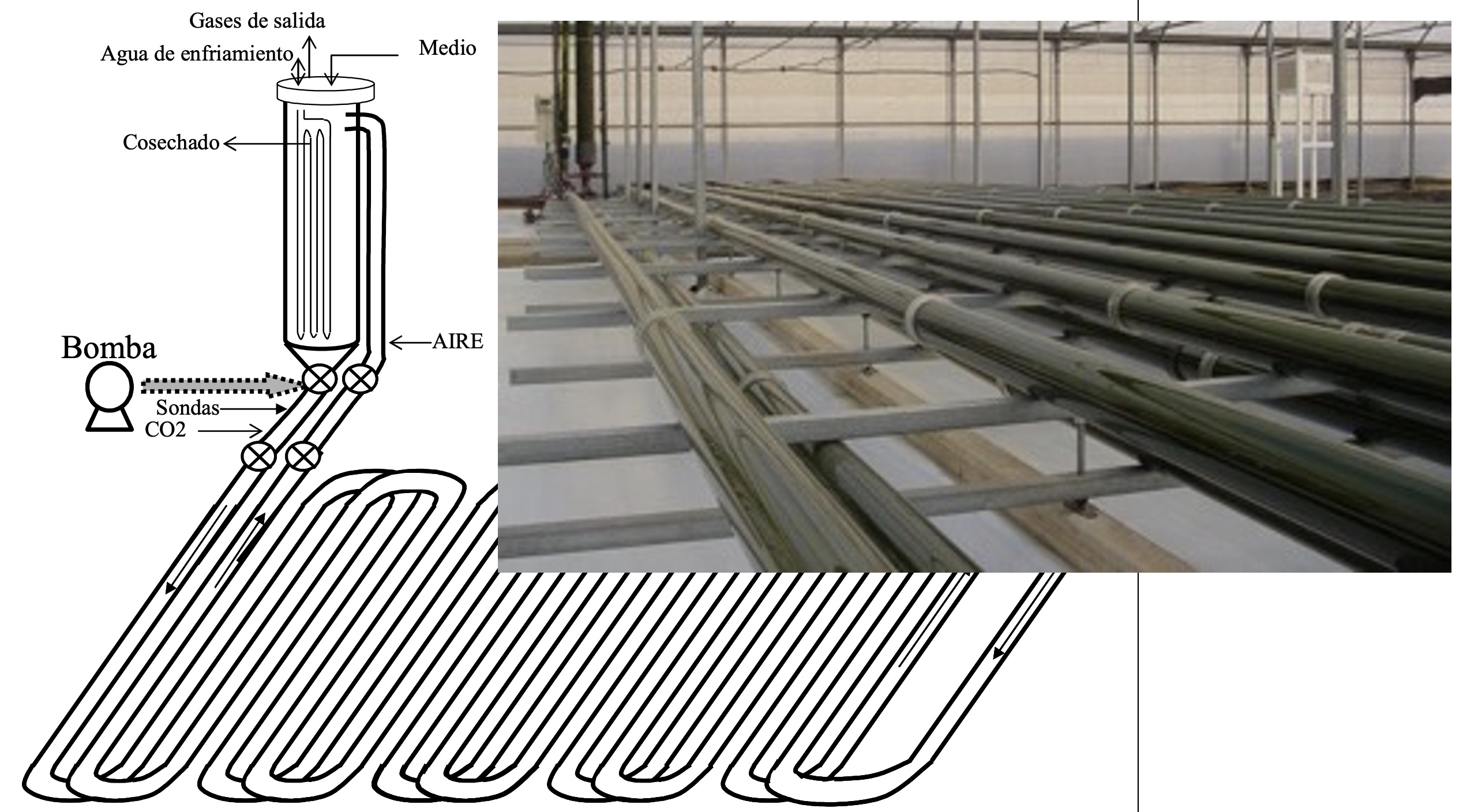
- Degasser/carbonator: a device separate from the loop where gas exchange, heat transfer and culture medium addition take place.
Let us look at examples of these PBRs:
- Vertical closed photobioreactors
BUBBLE COLUMNS
Bubble columns are very robust, cheap to manufacture devices that fulfil three needs with a single function (sparging): agitation, homogenisation and gas exchange (with pH control).
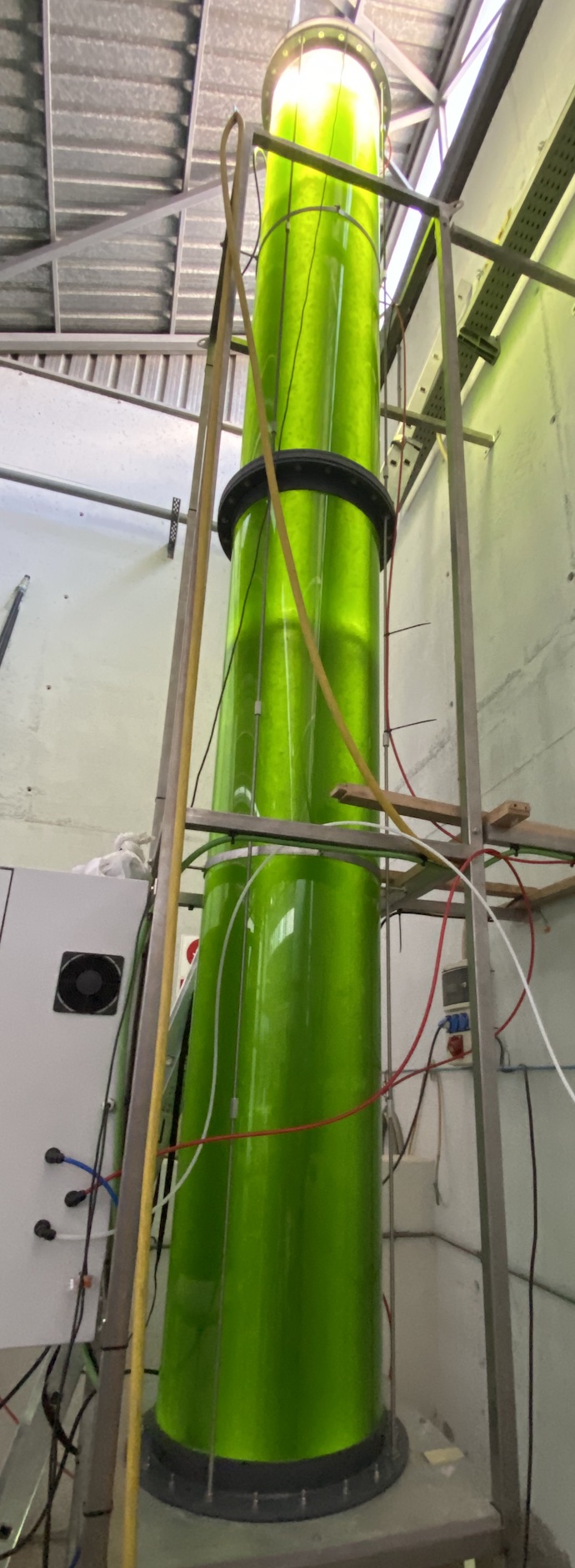 Bubble column for microalgae cultivation.
They have the advantage of having no moving parts.
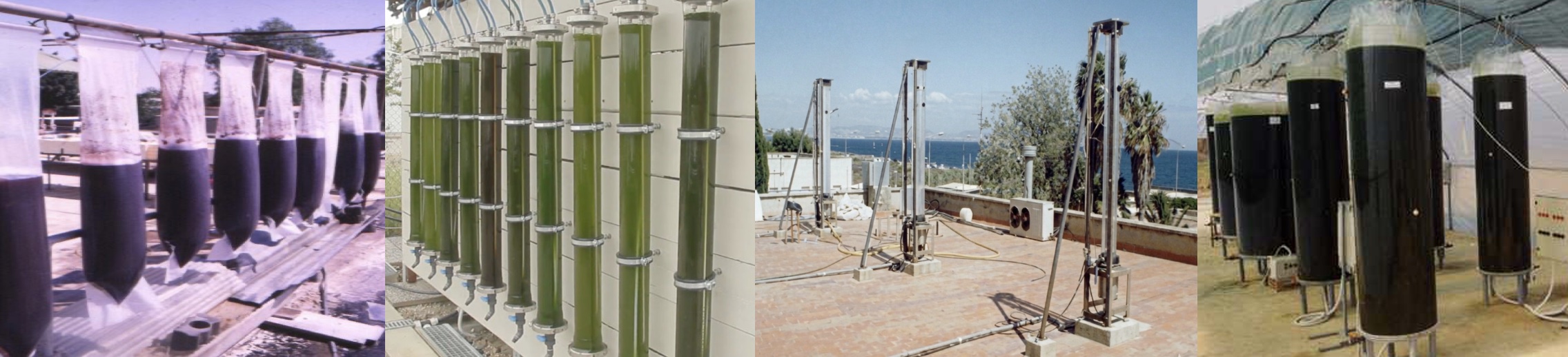
They have been presented in various configurations:
-
Simple bubble columns
-
Columns with internal recirculation of the split cylinder type (internal cylindrical space divided by a vertical partition that induces internal recirculation, orders the flow and prolongs gas/culture contact) or of the concentric tube type (which fulfils the same function as the partition)
-
Annular columns, consisting of two concentric tubes with the culture contained between them
Despite all these advantages, bubble columns, in any of their varieties, must operate vertically, which makes them poor light collectors. They also have other key disadvantages for industrial production:
-
They intercept little solar light. Especially during the most productive times of year and day (summer solstice, midday hours). At these times, the sun is closer to the vertical, so only a small fraction falls on the light-capturing surface.
-
Conflict between radius and volume : To obtain a culture volume adequate for industrial production, the radius must be of a size that makes light penetration difficult (low ) and slows growth ().
-
Difficult to scale up to achieve industrial culture volumes (several ): there are only two alternatives, increasing the radius or increasing the height .
- Increases in R are limited as they reduce growth rate and therefore productivity.
- Height increases at the cost of increasing pressure at the base, which is very inconvenient as it impairs desorption (partial pressure increases).
- Large is also very detrimental as sparging at the base generates very intense hydrodynamic stresses that can damage microalgae cells, causing hydrodynamic stress.
Bubble columns are therefore economical and stable devices, generally not well suited for industrial production but suitable for inoculum maintenance, a function for which slow growth and stability are advantages.
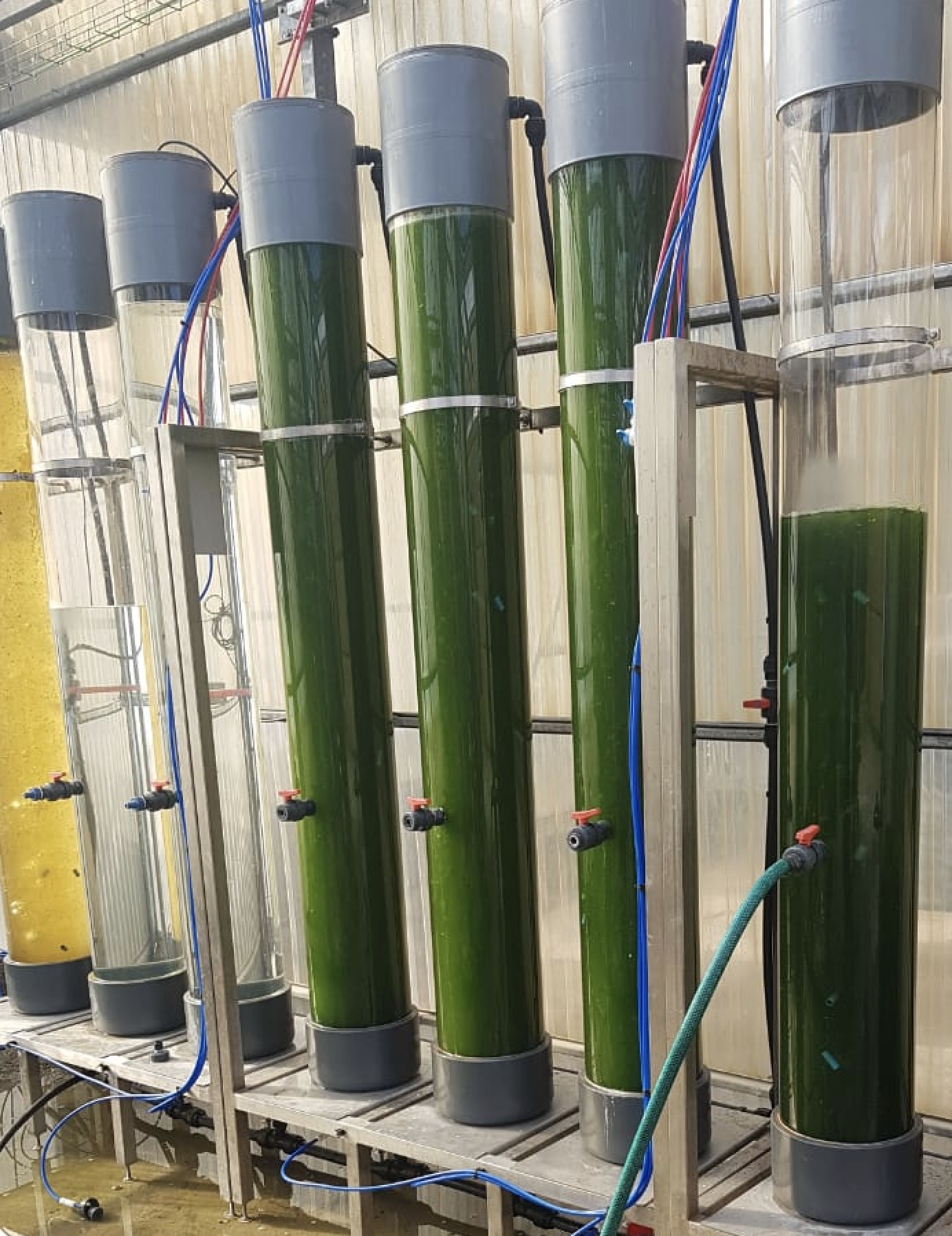
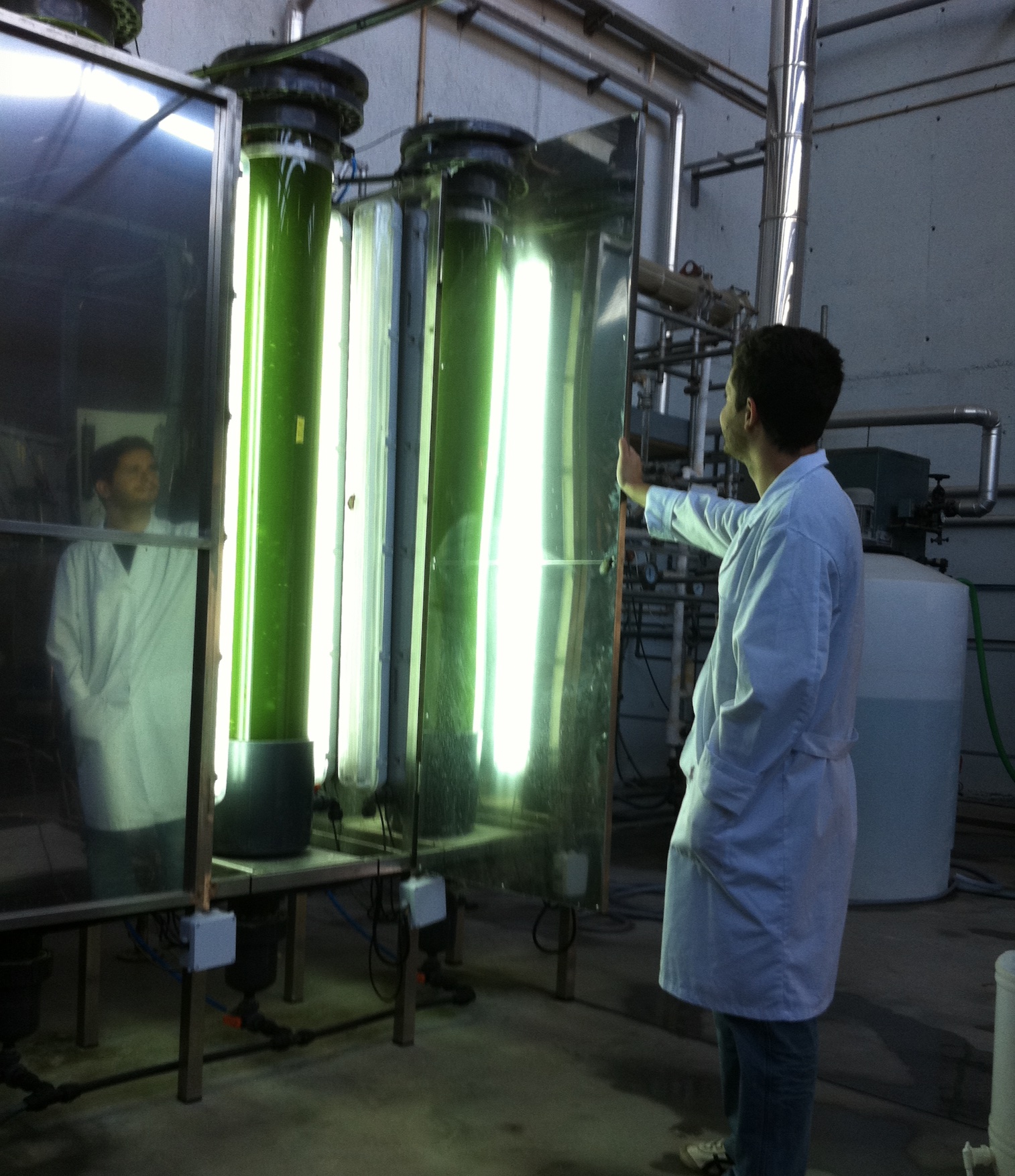
In video nº4 you can see the inoculation of a tubular PBR using bubble columns for this purpose.
FLAT-PANEL PHOTOBIOREACTORS
Flat-panel photobioreactors are an attempt to solve the problems of bubble columns in order to make them productive and scalable. This is achieved through a geometric change that decouples thickness from width .
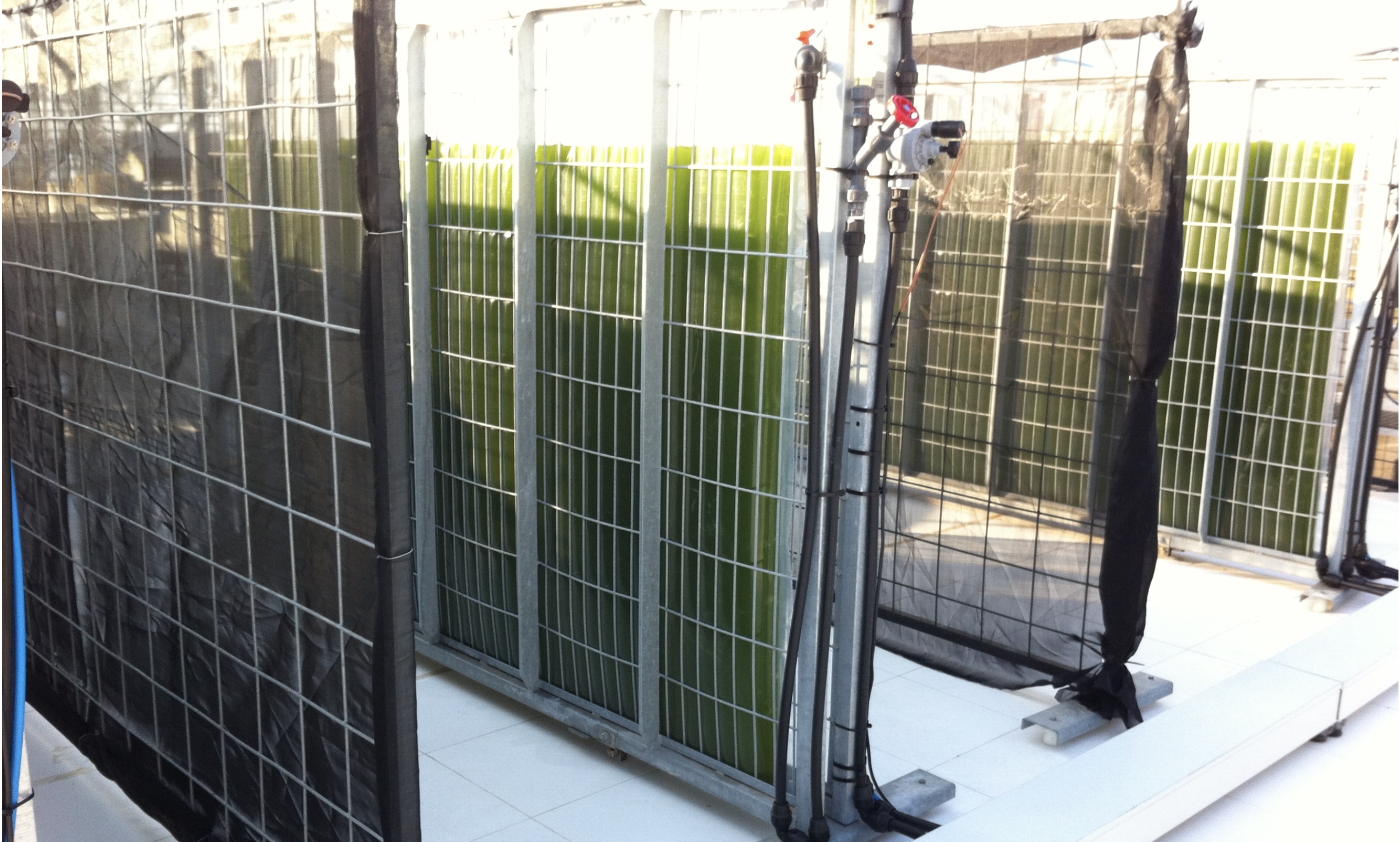
In this way, it is possible to build a PBR in which light penetrates well (small ) while containing a large culture volume (large ). To be competitive, Flat Panel PBRs (FPFBRs) must also be cheap to build, robust and easy to operate.
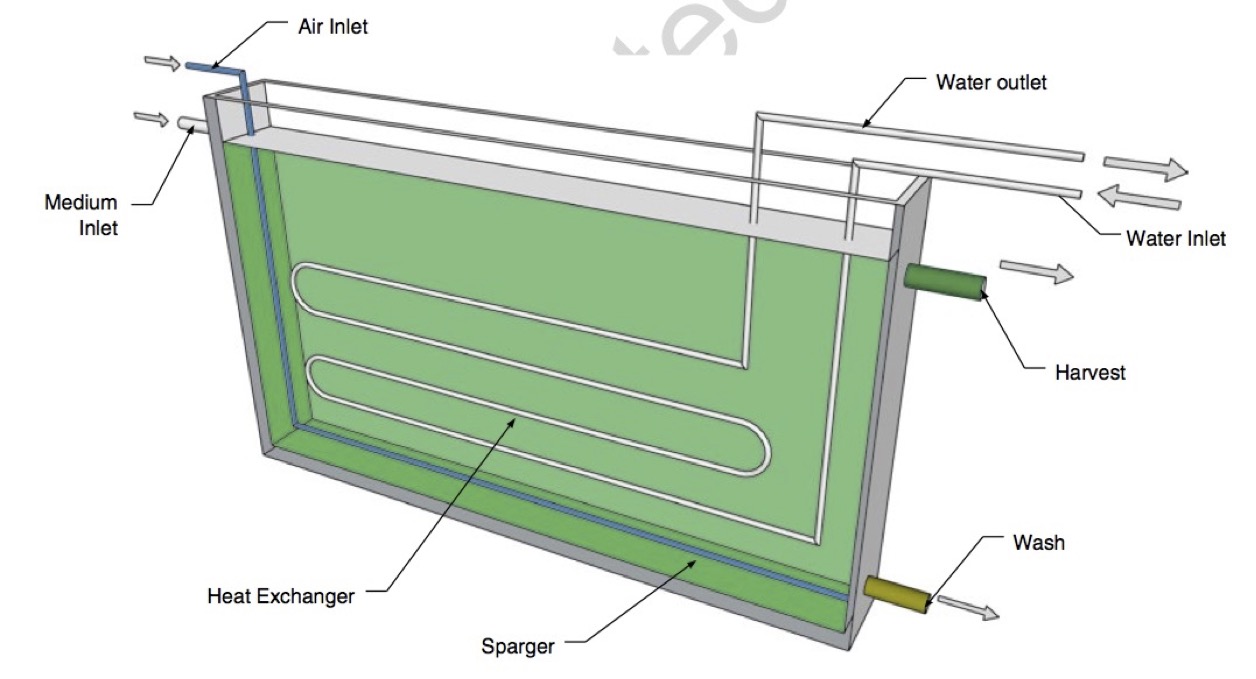 Components of a Flat Panel PBR.
FPFBRs are, in a sense, the thin-layer version of bubble columns. They have the following advantages:
- Better light penetration: and higher growth rate and, consequently, higher productivity.
- Higher biomass concentration: derived from a smaller culture thickness.
- Better scalability: in principle, the width of the FPFBR can be increased indefinitely while using the same gas transfer, pH control and heat transfer system in a larger-volume PBR.
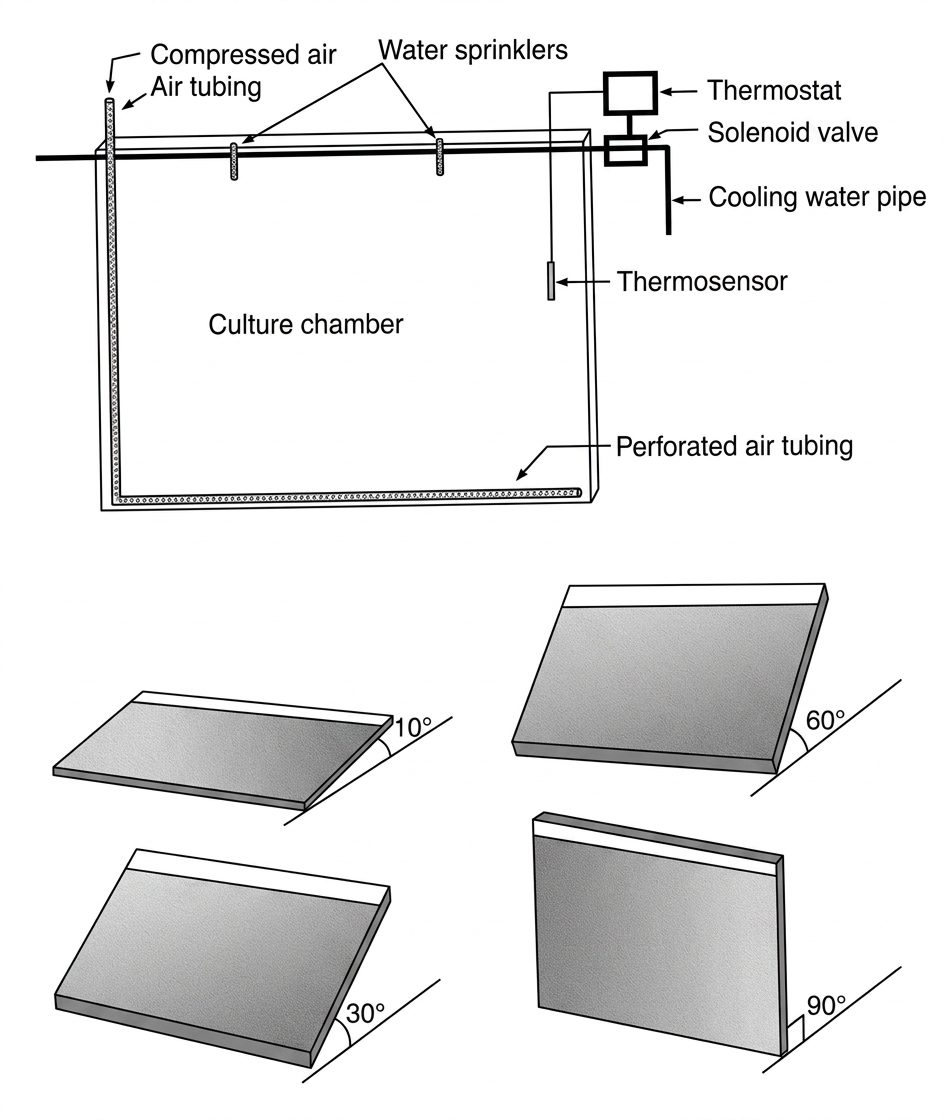 Inclined Flat Panel PBRs.
- More stable cultures resistant to perturbations due to higher cell density.
- Ability to operate tilted: unlike bubble columns, which can barely be inclined. This makes it possible to optimise light capture.
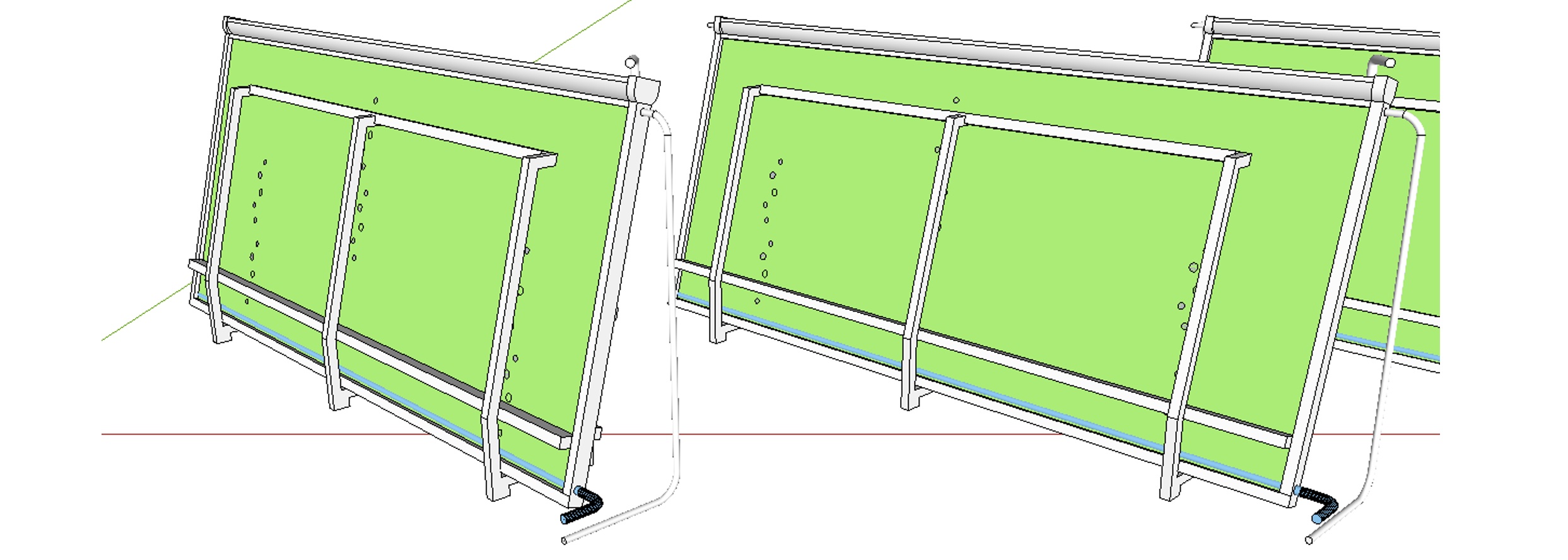
However, Flat Panel PBRs have important structural problems. Even at moderate liquid (culture) heights, the forces generated by liquid column pressure on their front and rear surfaces often lead to deformation and even fracture of the device. The use of thick transparent walls entails unsustainable costs, and the use of reinforcements such as the welded mesh shown in the photograph above contributes to reducing the light reaching the PBR.
In addition, the geometry with vertices and edges aggravates the fouling problem.
When plastic bags (plastic film) are used as transparent material supported by welded mesh frames, the irregular surface causes the plastic to become dirty rapidly and frequent replacement is necessary, with the downtime and costs that this procedure entails.
In summary, the disadvantages of FPFBRs are:
-
Structural weakness: which leads to reduced light capture due to the need for reinforcements.
-
Fouling: the presence of corners and edges makes maintenance very difficult. The use of plastic coatings requires frequent replacement.
-
Premature loss of viability: although the culture holds up, the deterioration of internal surfaces limits the duration of cultivation cycles, reducing productivity.
Paradoxically, all these disadvantages are magnified the more the width-to-thickness ratio is increased, which is the fundamental advantage of FPFBRs.
- Horizontal closed photobioreactors: Tubular PBRs (TFBRs)
Horizontal PBRs are so called because light capture and photosynthesis take place in a set of tubes (called the loop) in various arrangements that are positioned horizontally with respect to the ground.
Many designs of this type of PBR have been proposed. The main problem has always been to pack as many tubes as possible (to make the most of the available land) while avoiding shading between tubes as much as possible.
The problem is not trivial because the straight tube sections are connected by elbows that separate them, making it very difficult to pack tubes in a single plane. Many solutions have been proposed, but here we will only look at the most widely used designs:
-
Dual-loop tubular PBR: characterised by a loop in two planes that alternate tubes so that one does not prevent light from reaching another.
-
"Fence"-type tubular PBR: characterised by a vertical frame on which the tubes are mounted in a (nearly) horizontal position.
Other varieties (less commonly used) are shown in the figure below. The "coil" or bobbin type wraps the tube around an axis, but cannot avoid intense internal shading. In the "manifold" type, a central opaque tube distributes the culture to a set of transparent tubes (vertical in the case shown, but they can be horizontal). On the right is a single-plane horizontal TFBR in which the constructive difficulty of installing the tubes close to each other can be appreciated.
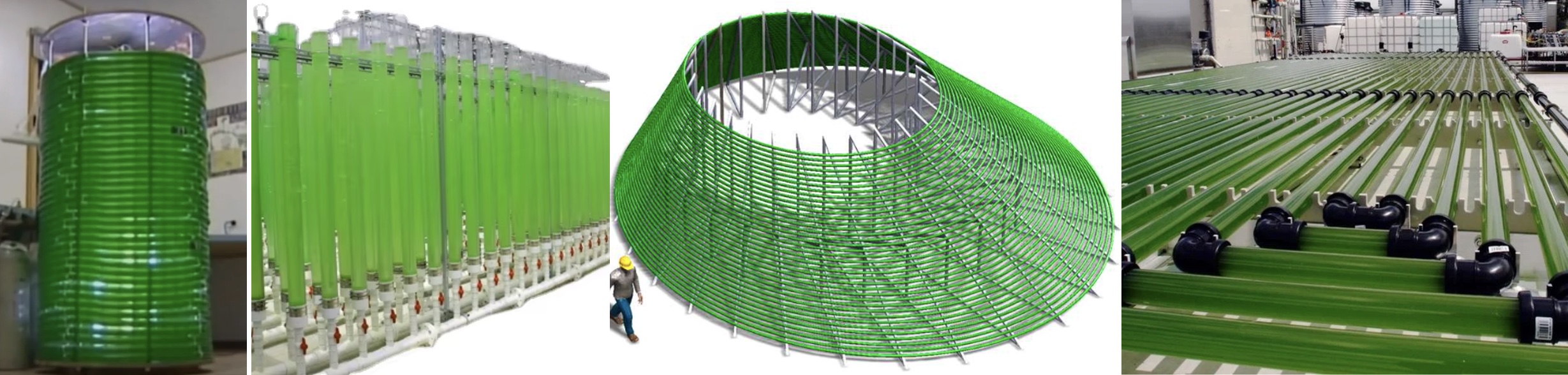
Dual-loop tubular PBR
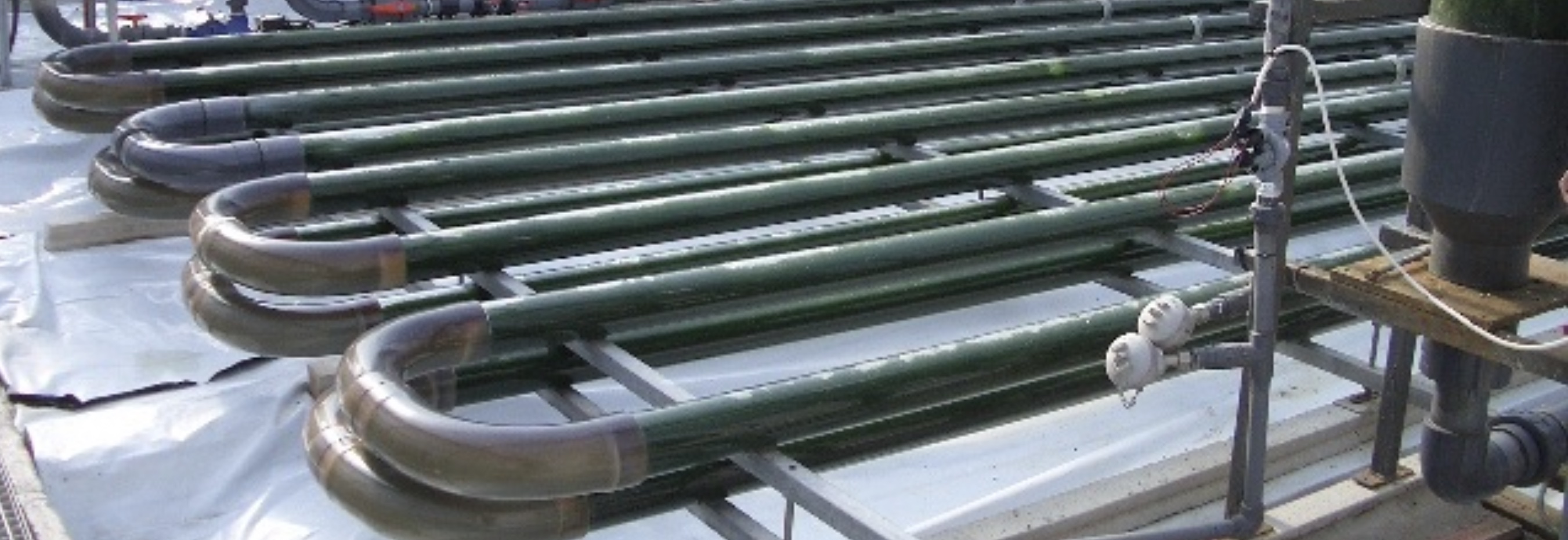
The figure below shows a dual-plane TFBR, which is one of the most efficient ways of building this type of PBR as it allows reasonable tube packing ( of shadow per of ground occupied), with non-intercepted light being used as albedo (diffuse reflection from the ground, which is made white for this purpose).
The loop construction efficiency of this type of TFBR comes from several factors:
-
Long tubes of equal length can all be used (unlike the PBR visible in the upper-right figure), reducing structural complexity.
-
The dual-loop dual-plane design is efficient in light interception without being too complex.
-
The elbows are relatively wide, limiting the hydrodynamic stress produced by turbulence in very tight bends.
-
The frame on which it rests is relatively simple. The frame is very important for preventing gas accumulation in the tubes. To this end, it must maintain at all times a slight positive inclination in the direction of flow. Otherwise, gas pockets appear that render part of the TFBR's useful culture volume unusable.
Degasser/carbonator
As mentioned, in TFBRs, medium addition, gas exchange and heat transfer are carried out in a separate element simply called the "Degasser", referring only to its role in removing the generated in the loop during photosynthesis.
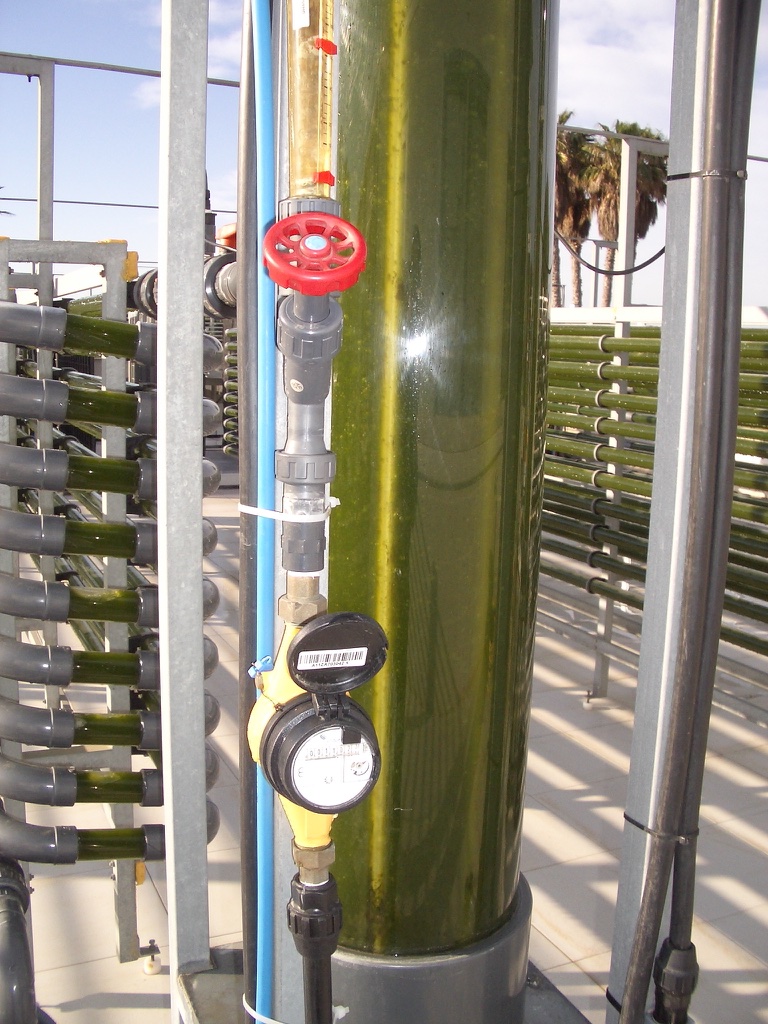 Degasser with heat exchanger.
The presence of a degasser (shared with fence-type PBRs) allows specialisation of the two PBR components: the loop designed specifically to optimise photosynthesis and growth, and the degasser designed for all other functions needed to maintain the culture.
The image on the right shows a degasser equipped with a stainless steel heat exchanger through which a coolant can be circulated to maintain culture temperature. The calculation of these exchangers will be covered in Lesson 6.
"Fence"-type tubular PBR
The construction of dual-plane PBRs, as mentioned, is relatively simple and robust.
However, it is surpassed in simplicity, flexibility and ease of maintenance by the use of vertical frames that characterise FTFBRs (Fence-Type PBRs, for short).
FTFBRs remain horizontal tubular photobioreactors since, despite their vertical evolution, the tubes composing the loop remain arranged in a horizontal position.
Fence-type PBRs have the following advantages compared to single- or dual-plane loop PBRs:
-
Simpler frame and easier to manufacture.
-
Allows easier control of vertical spacing between tubes and horizontal spacing between planes.
-
It is easier to maintain the positive inclination of the tubes in the direction of flow to prevent gas accumulation.
-
It is relatively easy to maintain and service. Things like cleaning or replacing a tube can be very complicated in single- or dual-plane horizontal tubular PBRs.
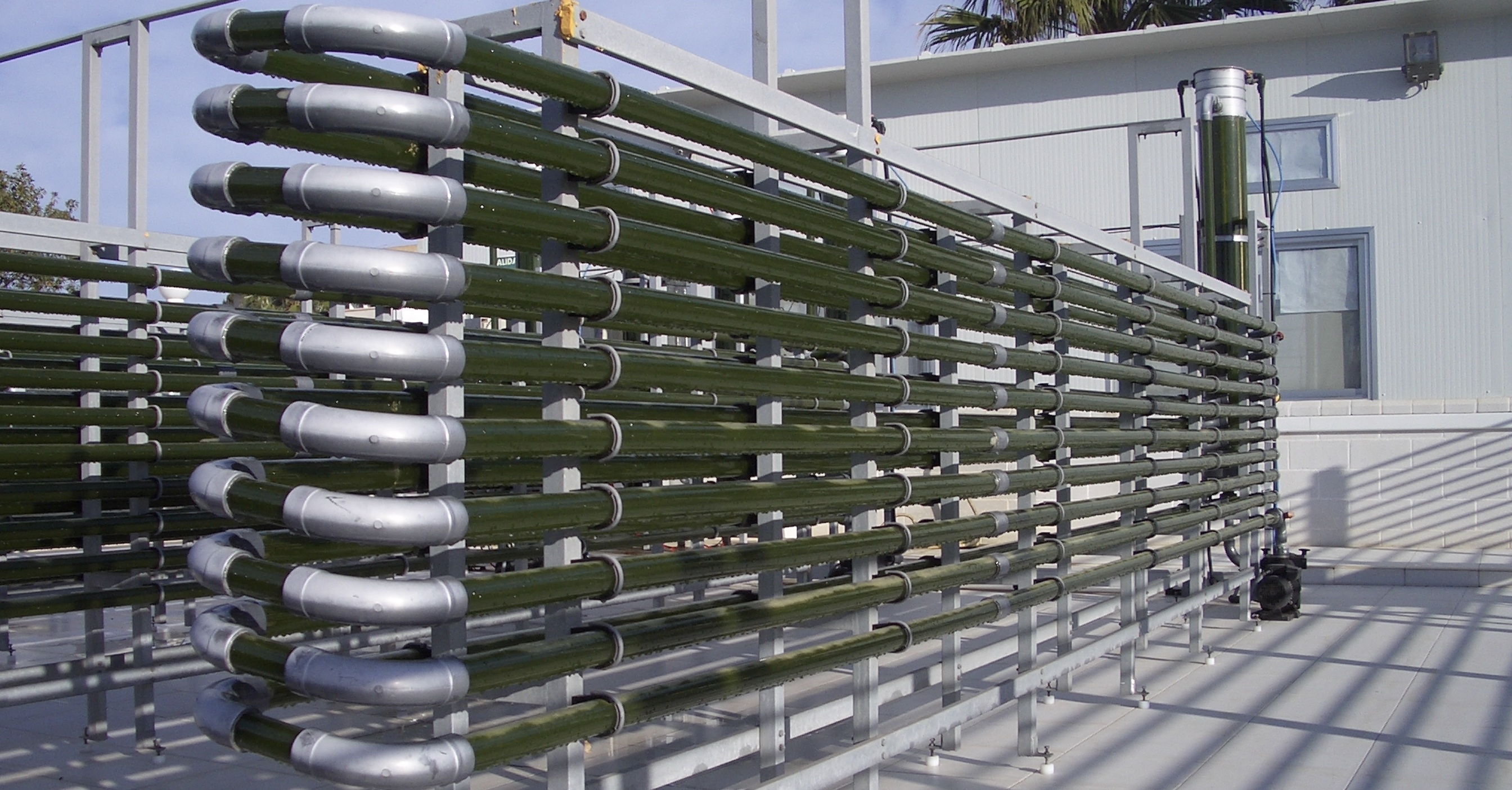
The fence-type PBR is probably the most widely used closed photobioreactor for industrial-scale microalgae production.
This type of PBR is also manufactured with the tubes in a single plane.
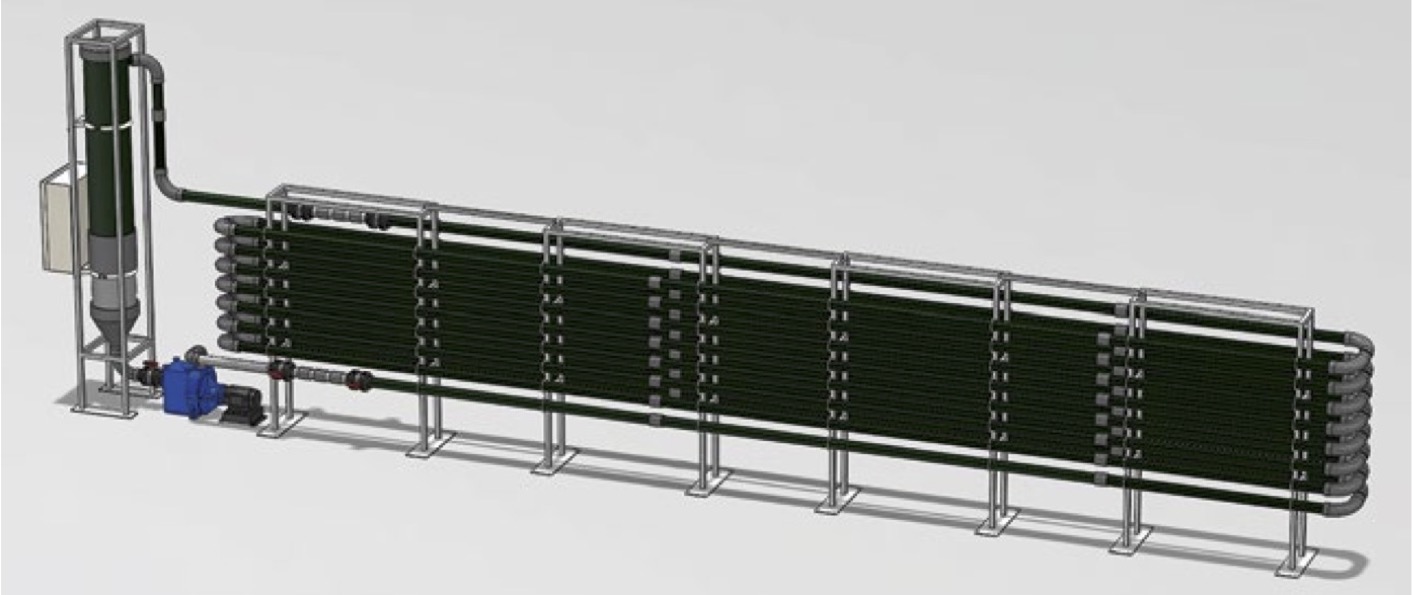
- Illustrative videos: PBRs in operation.
Summary - Types of photobioreactors
Classification
Open PBRs → cheap, low efficiency, only for resistant species Closed PBRs → expensive, higher productivity, wide range of species
Open PBRs
Open Ponds - the simplest, no moving parts. Only viable for highly resistant species (Spirulina, Dunaliella salina).
Raceways (RFBRs) - the most widely used. Paddle wheel for mixing, can operate continuously. Typical depth 15–20 cm. Capacity of hundreds of m³.
Thin Layer (TLFBRs) - evolution of the Raceway. Fluid layer of 1–2 cm → higher biomass concentration, better vertical mixing, smaller volume. Can be partially covered.
Vertical Closed PBRs
Bubble columns - cheap, no moving parts, robust. Sparging fulfils three functions: agitation, homogenisation and gas exchange. Not well suited for industrial production (intercept little solar light, difficult to scale). Ideal for inoculum maintenance.
Flat Panel (FPFBRs) - better light penetration, higher biomass concentration, better scalability. Important disadvantages: structural weakness, fouling and premature loss of viability.
Horizontal Closed PBRs: Tubular (TFBRs)
Formed by a loop (where photosynthesis takes place) and a degasser (gas exchange, pH control, heat transfer).
Dual loop - efficient packing, tubes of equal length, wide elbows (low hydrodynamic stress).
Fence-type (FTFBRs) - vertical frame, simpler and more flexible. Easy maintenance, control of tube spacing, easy to prevent gas accumulation.