1 - Fundamentals of microalgae-based processes.
1.3 - Fundamentals of microalgae cultivation
We will list the elements required to carry out a microalgae culture. This course focuses on microalgae cultivation at industrial scale, but what is described in this section is valid for any scale, from laboratory to pilot plant to industrial production.
The necessary elements are:
- Inoculum
- Culture medium
- Lighting
- Temperature control
- Agitation and mixing
- Gas exchange ( and )
- pH control
- Photobioreactor
The aim of this section is that, after studying it, you will be able to carry out a microalgae/cyanobacteria culture effectively.
- Inoculum
An inoculum is a small quantity of culture broth containing the microorganism to be reproduced, and is in a condition to initiate a new culture several orders of magnitude larger than the inoculum volume.
For preservation purposes, inocula can be kept on Petri dishes with agar medium or in test tubes with agar slants. These solid-medium cultures must be transferred to liquid medium before they can be used in useful cultures at laboratory or industrial scale.
Microalgae inocula are particular in that they need to be kept illuminated for the microorganism to survive.
An aliquot of inoculum is used to scale up to progressively larger cultures. In principle, the inoculum should be sufficient to provide a cell density or concentration of around 50 mg/L in order to achieve a robust culture.
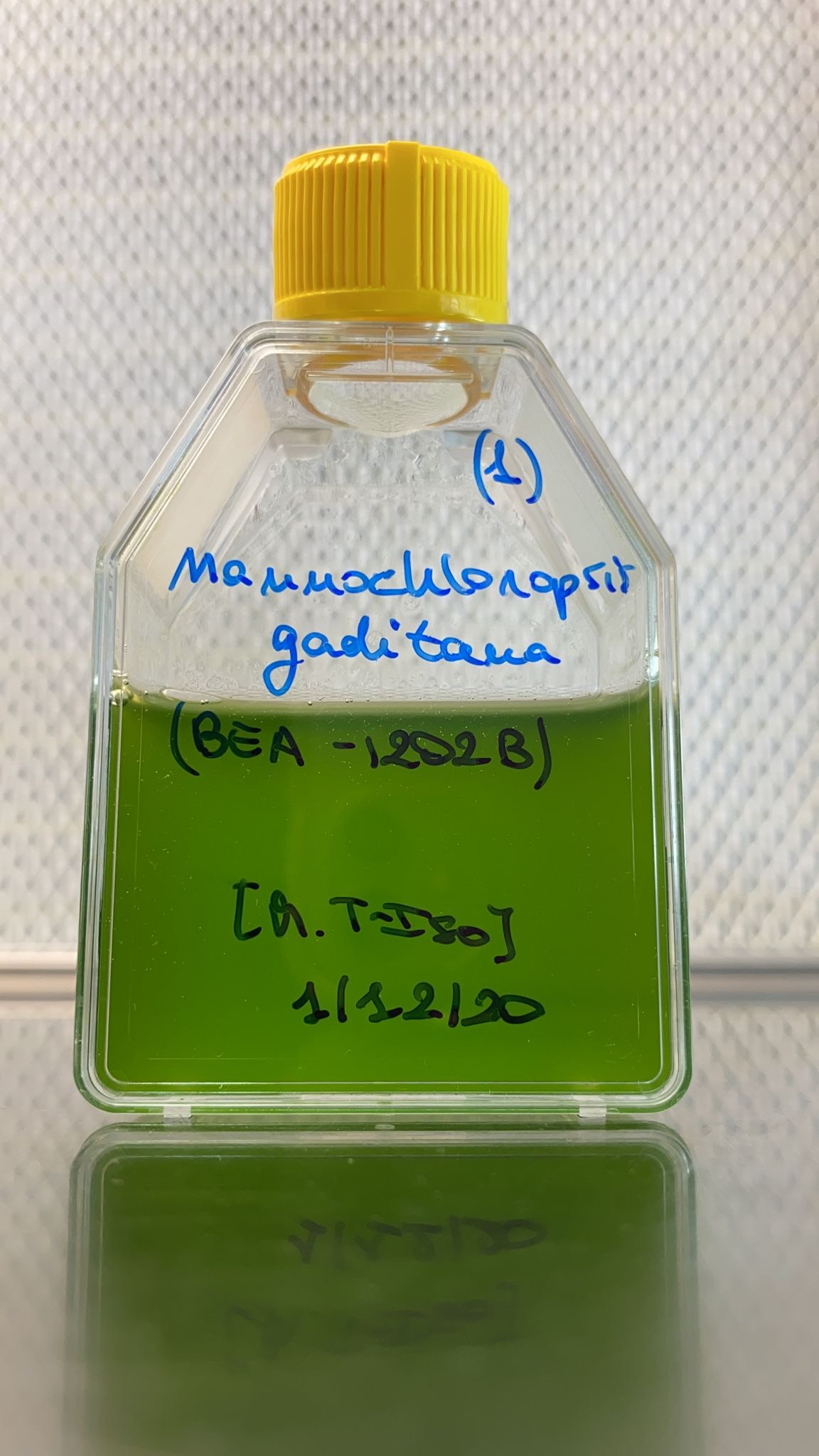
Obtaining inocula
Inocula can be obtained in various ways:
- Strain isolation: from sea, lake, river or any body of water likely to contain these microorganisms.
- Asking someone. Many people will have no problem letting you take a sample from their culture.
- Purchasing them from microorganism collections.
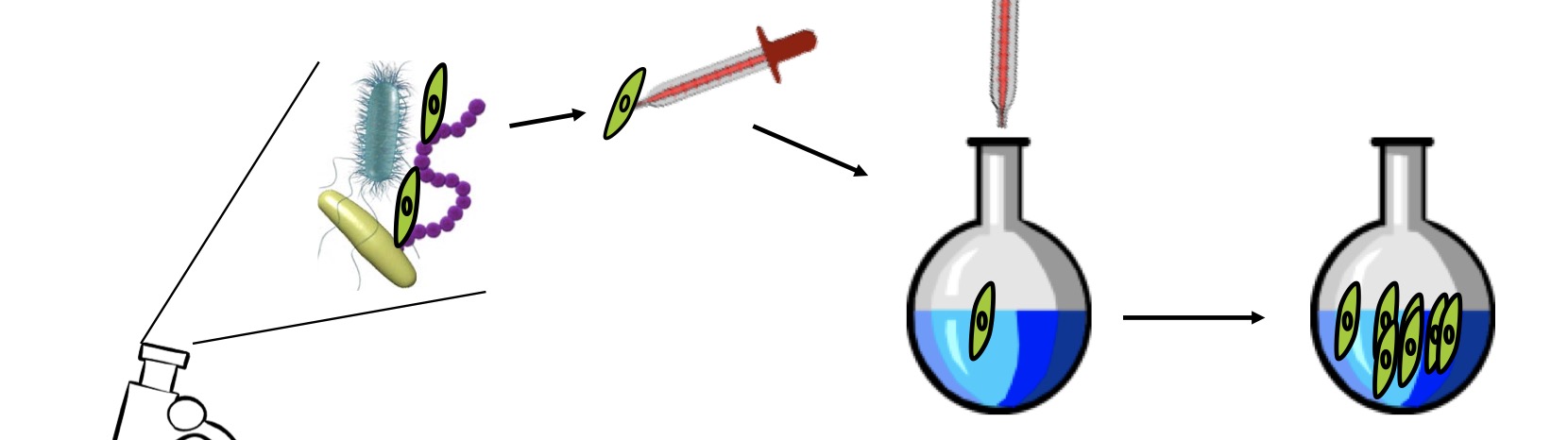
Alternatives 1 and 2 depend on your availability, your network of contacts and your personal charm. However, you can purchase inocula of the strains available from the so-called "Banks" or "Collections" of microorganisms.
Microorganism collections
There are three institutions I can recommend:
- CCAP (Culture Collection of Algae and Protozoa) in Oban, Scotland, UK
- UTEX Culture Collection of Algae, Austin TX, USA
- BEA (Banco Español de Algas) in the Canary Islands, Spain
You can access any of these collections through the following links:



The following image shows the purchase of Haematococcus pluvialis from UTEX. 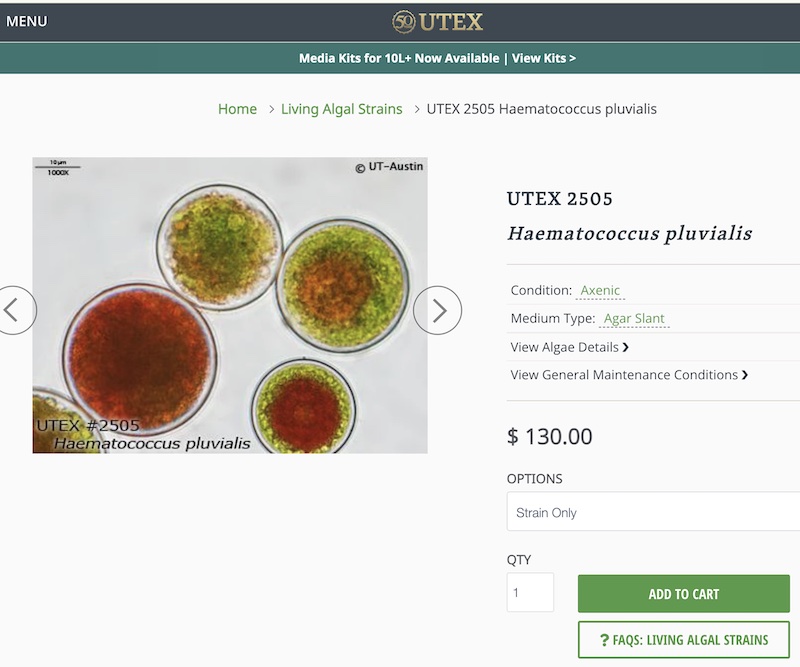
The hard part is not continuing to buy.
- Culture medium
From the photosynthesis equation we know that microalgae need and to grow. The latter is both a nutrient and part of the environment, since microalgae develop in aqueous media. We have also seen that microalgae need:
-
A nitrogen source in the form of some nitrate or ammonium salt. Amino acids or urea can also be used as nitrogen sources.
-
Sulphur, normally as sulphate .
-
Phosphorus as phosphate
In addition, the following elements are clearly necessary:
-
Magnesium , an essential component of chlorophylls (it is the core of the tetrapyrrole ring found in all chlorophylls) and a cofactor of enzymes, among other functions.
-
Manganese, a central component of the oxygen-evolving complex in Photosystem II and a cofactor of the superoxide dismutase enzyme that prevents oxidative damage, among other functions.
-
Ions such as Calcium , Sodium , Potassium , or Chloride .
All of these nutrients appear in the culture medium in relatively large amounts and are therefore called macronutrients. However, a large number of other elements appear in very small amounts and are usually called minor nutrients or trace nutrients.
Nevertheless, although they appear in small amounts, they are essential for microorganism growth. Among these nutrients we can mention:
- Iron
- Cobalt
- Zinc
- Molybdenum
- Copper
- Boron
- Vitamins (Biotin, Thiamine, Niacinamide, Cyanocobalamin)
And others may appear. This list is not exhaustive.
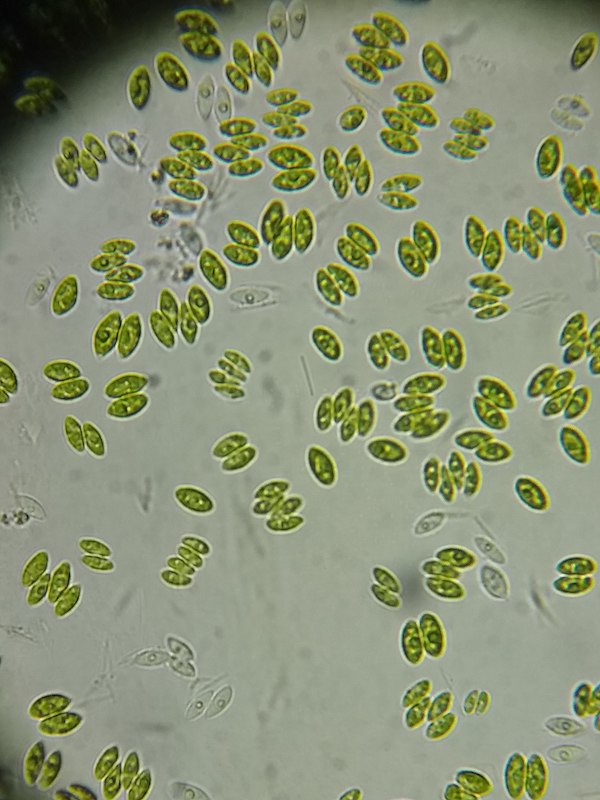
The truth is that knowing a complete medium for a microalgae strain is not easy. In the past it required detailed literature research. However, with the online resources available today, it is sufficient to 1) search for the strain you wish to cultivate in a collection, 2) identify the recommended medium and download the recipe:
This is an example of a completed search. Try searching for media for Haematococcus, Microcystis or Spirulina (Arthrospira), to suggest a few.
The culture media found in the literature or in collections are maintenance media, which will allow you to repeatedly culture small laboratory cultures for strain characterisation or as inocula for larger systems.
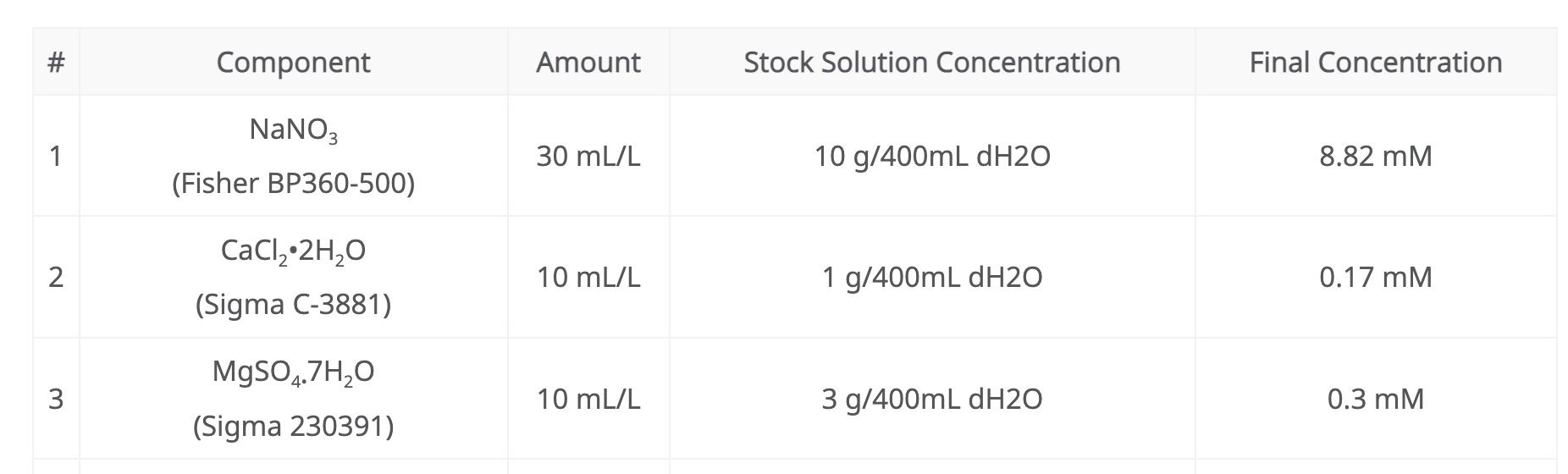
However, these media are not suitable for production. Note the final composition of the B3N medium shown above. The concentration of sodium nitrate is only 8.83 millimoles/L. This corresponds to approximately 0.75 g/L, which equals 0.125 g/L of assimilable nitrogen.
Making use of the stoichiometry learned in the previous section, we know that . Therefore:
So the maximum biomass concentration would be limited to 2.5 g/L by the nitrogen. This is not acceptable in a production medium, as in photobioreactors we often reach much higher concentrations. Therefore, these media should be considered as lists of essential nutrients and as ideal proportions. For production media, the concentrations of the major nutrients will be determined through mass balances applied to the limiting substrate.
- Lighting
Microalgae are autotrophic microorganisms that obtain their energy from light, as already mentioned.
Light is electromagnetic radiation, which is emitted and absorbed in the form of quanta, so we can measure the quantity of flux arriving as photon flux density (PFD) and the common units are .
Light carries energy. This energy depends on the wavelength or frequency of the wave associated with the photon. Photon energy is usually given as its wavelength in nanometres . However, the calculation is not straightforward. To calculate the photon energy , we need to use Planck's equation:
Where:
- = photon energy
- = Planck's constant (NOT reduced; the reduced form is )
- = frequency (Hz, )
- = speed of light
- = wavelength (m)
Rearranging these equations, the following expression can be obtained, giving photon energy as a function of wavelength :
PAR RADIATION: Well, all of this to tell you that the light radiation useful for photosynthesis consists of photons with an energy corresponding to between 400 and 700 nm. This is known as "PAR radiation", from the English "Photosynthetically Active Radiation".
Therefore, it comes as no surprise that we refer to photosynthetic photon flux density as PPFD (P+PFD). In practice, we will use the letter for Irradiance, which is the physical name for this quantity.
The following component allows the photon energy to be calculated based on its wavelength in nanometres:
⚛️ Calculadora de Energía del Fotón
This is of interest to us for two reasons:
-
To be able to convert from energy units () to quantum units
-
To be able to evaluate the energy efficiency of PBRs (energy fixed / energy absorbed).
Photons of 700 nm (171.0 kJ/mol and above) can excite PSI (photosystem I). Photons of 600 nm (176.0 kJ/mol and above) can excite both photosystems. All photon energy above these lower limits is lost as internal dissipation.
Light sources
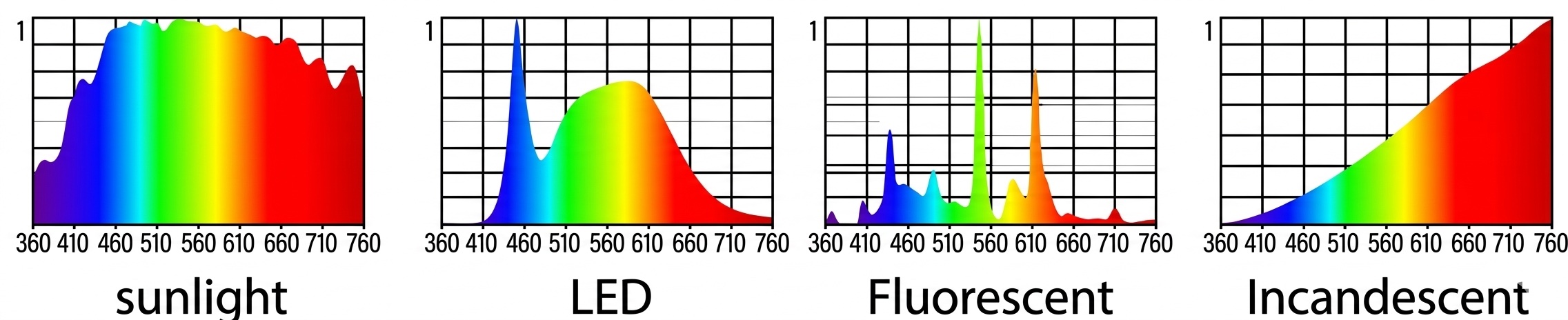
There are natural and artificial sources. But any of them have something in common: they do not contain a single wavelength, but a mixture of wavelengths between 400 and 700 nm. This composition is called the spectrum:
-
The spectrum of a radiation is the relative distribution of the number of photons among the different wavelengths. Often, this distribution is given in energy rather than number of photons.
-
The spectrum is therefore a function that allows the light radiation at each wavelength to be obtained from the total PAR irradiance as follows: . The distribution function must be normalised:
The following images show the spectra of different light sources (between 400 and 700 nm).
-
Care must be taken because, if energy measurements are available, light with lower-energy photons will produce more photosynthesis, since the same energy is carried by more photons and it is the photon flux that drives photosynthesis.
-
For example, 100 of "incandescent" light will produce more photosynthesis than 100 of "LED" light. (Another question is whether the incandescent source is much less efficient than the LED, but that is not discussed here.)
For example, the same energy with a spectrum richer in red carries more photons than a flux rich in violet. This can be verified with this interactive component:
💡 Flujo Fotónico vs Flujo Energético
- Conversion from to is possible by knowing the photon energy (as mentioned above), but when dealing with sources with a continuous spectrum, it will be necessary to calculate the MEAN photon energy as
Photon flux must always be measured, not energy flux. Energy flux is confusing and indeterminate for photosynthesis. It is sufficient to use a quantum sensor instead of an energy sensor. PAR quantum sensors are widely available for measurements on photosynthetic organisms.
SUN
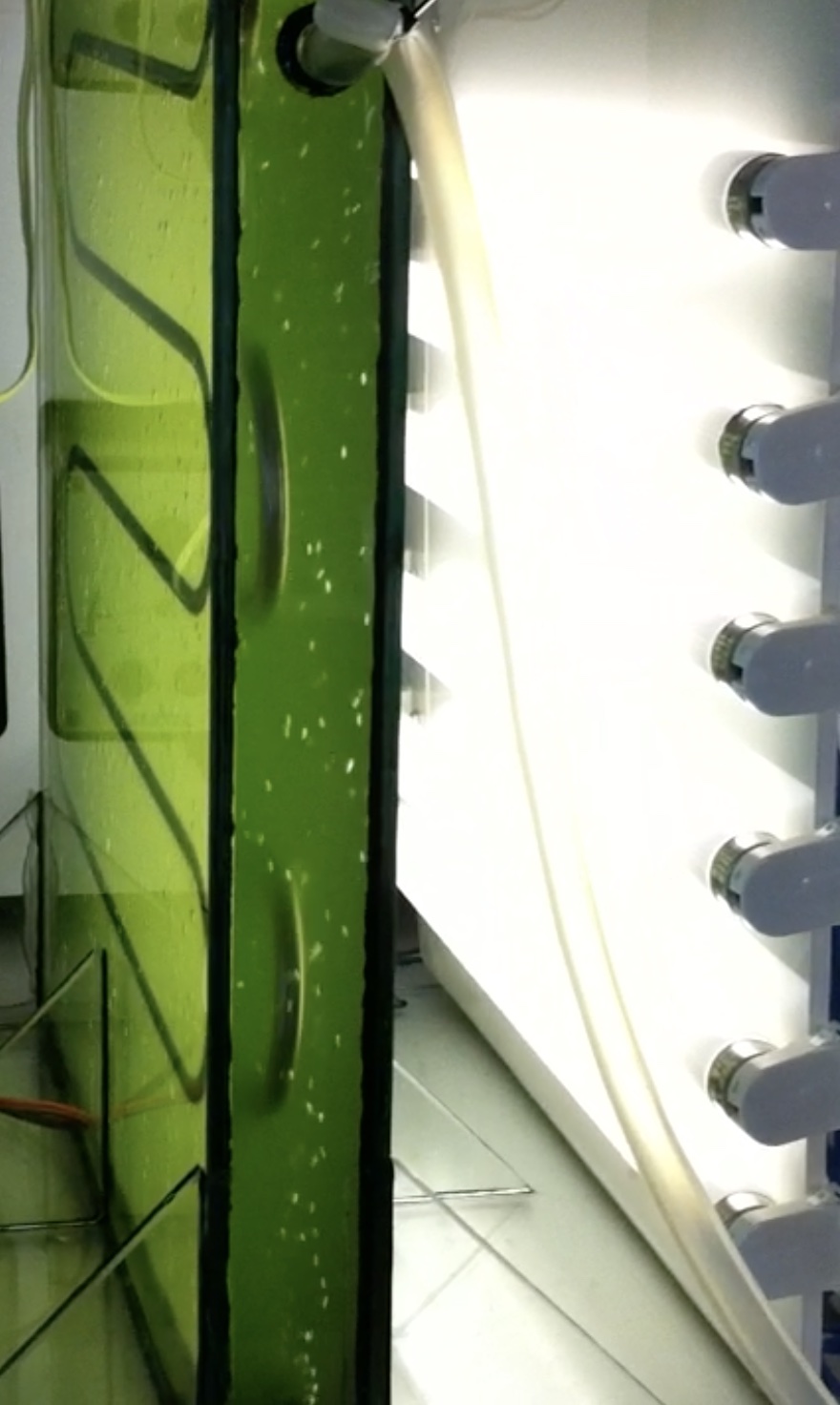
The most important light source for microalgae cultivation is sunlight. It has all the advantages:
-
It is free
-
It is widely distributed
-
It is perfectly suited to microalgae cultivation.
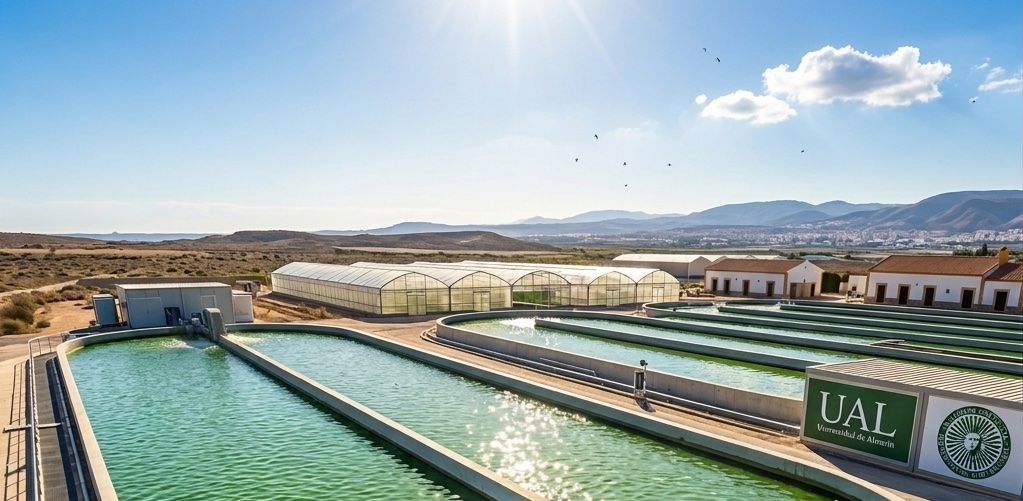
However, it also has some disadvantages:
-
It varies with location, season and time of day.
-
It adds a significant amount of heat (INFRARED radiation, which accounts for slightly more than 50% of the solar spectrum), heating the cultures.
-
It cannot be regulated; it is not available at night.
Some of these disadvantages are not really disadvantages, as the diel or circadian cycle is often required by many microalgae and cyanobacteria for their growth.
If you wish, you can check the photon flux density and angle of incidence at your location with this TOOL  .
.
- Temperature control
As just mentioned, sunlight carries a large amount of thermal radiation that ends up converted into heat.
In fact, a large proportion of the PAR radiation (around 90% or even more) also ends up converted into heat for various reasons, however well designed the PBR may be.
Solar radiation can carry up to 1000 , which, without temperature control, can produce temperature increases of up to 5–10°C/h.
Under these circumstances, without temperature control, the PBR would rapidly reach temperatures above 40°C, which are lethal for most microalgae and cyanobacteria strains of interest.
Not only that. If PBRs heat up without control, environmental conditions deviate from their optimal values, which reduces performance and renders growth models useless. Below are the optimal and maximum temperatures for various microalgae and cyanobacteria strains.
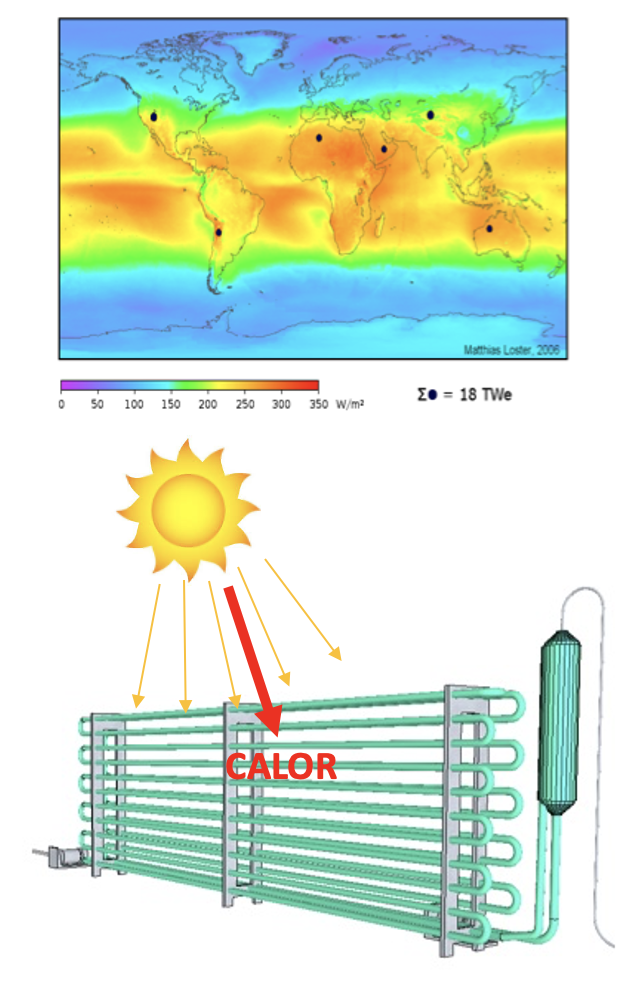
Table: Optimal and maximum temperatures for microalgae and cyanobacteria (references at the bottom):
| Type | Species | Optimum (°C) | Maximum (°C) |
|---|---|---|---|
| Microalga | Chlorella vulgaris | 25–30 | 35–38 |
| Microalga | Haematococcus pluvialis | 20–25 | 28–30 |
| Microalga | Dunaliella salina | 22–35 | 38–40 |
| Microalga | Nannochloropsis oculata | 20–25 | 28–30 |
| Microalga | Scenedesmus obliquus | 25–30 | 35–37 |
| Microalga | Phaeodactylum tricornutum | 18–22 | 25–27 |
| Cyanobacterium | Arthrospira platensis | 35–38 | 40–42 |
| Cyanobacterium | Synechocystis sp. | 30–35 | 38–40 |
| Cyanobacterium | Microcystis aeruginosa | 27–32 | 35–40 |
| Cyanobacterium | Anabaena cylindrica | 25–30 | 35 |
Therefore, it is often essential to operate with some form of temperature control. It is common to operate with a heat exchanger installed in some part of the PBR.
To design the heat exchanger, the following parameters must be known:
- W: Amount of heat entering the PBR (watts = J/s)
- : Optimal temperature of the microalgal strain. This temperature will be the culture temperature
- : Coolant temperature. Temperature of the fluid to be used for cooling.
From these variables, the heat exchanger can be designed. Its two main variables are:
-
A: Heat exchange area .
-
: Required coolant flow rate.
Operating with a properly sized heat exchanger allows stable operation close to the optimal temperature.
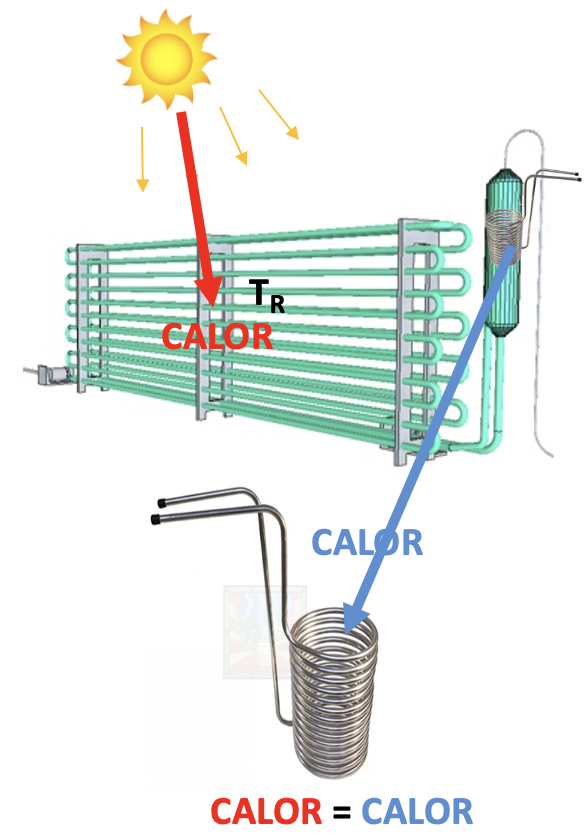
The sizing of temperature control systems will be studied in Lesson 6.
- Agitation and mixing (impulsion)
Microalgae, like any other microorganism, need to be mixed and agitated to promote homogenisation, nutrient distribution, heat and mass transfer. This is true both for laboratory cultures and for industrial production cultures.

This also prevents microalgae from settling, adhering to the walls and causing fouling. Moving the culture is not usually sufficient to completely prevent fouling, but it is still essential.
The need for liquid propulsion is obvious in systems such as tubular photobioreactors, which require propulsion to circulate the culture through the circuit. Centrifugal pumps or pneumatic devices (airlifts) are often used.
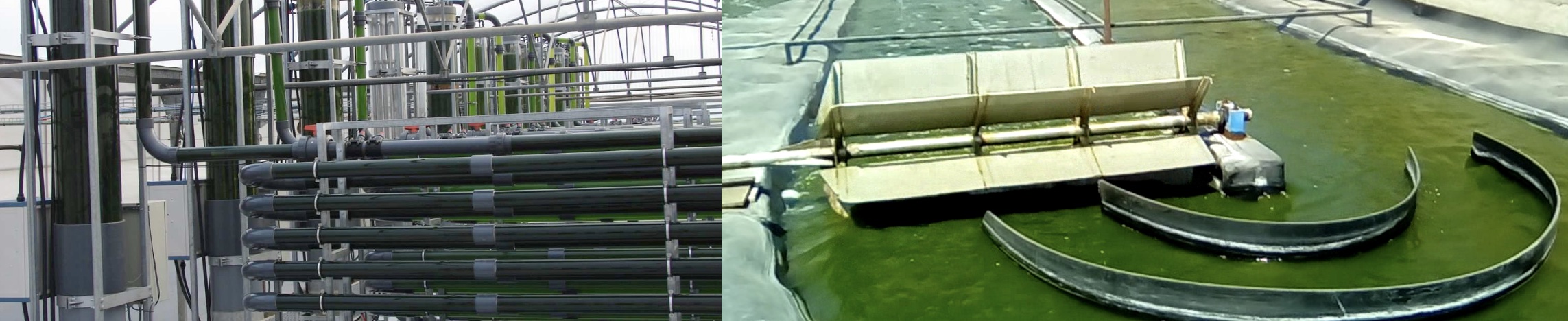
Raceways also require circulation. Paddle wheels are commonly used for pumping.
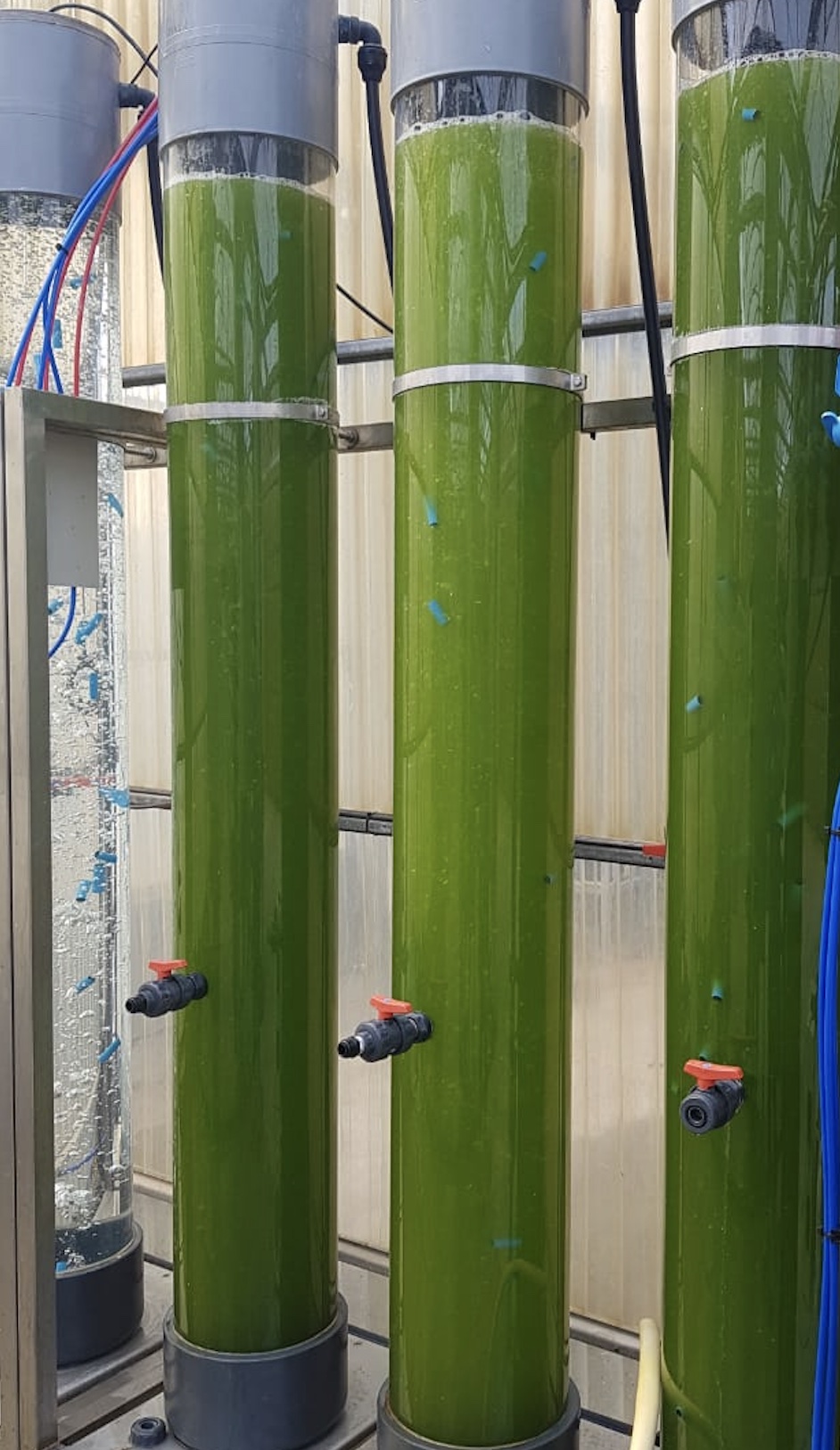
Devices such as bubble columns or vertical flat-panel photobioreactors do not require pumping. Mixing and heat and mass transfer are promoted by sparging.
Devices such as bubble columns or vertical flat-panel photobioreactors do not require the use of classical pumping devices. Mixing and heat and mass transfer are promoted by sparging.
In summary, the methods of propulsion, agitation and mixing are as follows:
-
Pumps (mainly centrifugal, also peristaltic).
-
Paddle wheels: for driving fluids in channels such as those in raceway PBRs.
-
Airlift pumping: a method in which a gas (air) is injected into a water column so that it circulates by density difference. This method is very suitable for microalgae but has limited application.
-
Sparging is not a pumping method but rather one of agitation, mixing and homogenisation.
The design of these devices consists of determining the fluid flow rate to be pumped (q, ), the pressure drop to be overcome (, Pa, sometimes given as a head difference , m, hence the name "head loss") and calculating the power required by the impeller (, watts = J/s, or Hp).
Some of these cases will be studied in Lesson 6.
- Summary
Elements required for industrial cultivation:
- Inoculum - small quantity of culture to initiate a larger one (~50 mg/L initial density)
- Culture medium - essential nutrients
- Lighting - energy source
- Temperature control - temperature management
- Agitation and mixing - homogenisation
- Gas exchange (O₂ and CO₂)
- pH control
- Photobioreactor - culture container
Inoculum
- Obtained from: isolation, contacts, or collections (CCAP, UTEX, BEA)
- Stored on Petri dishes or agar tubes
- Requires constant illumination
Culture medium
Macronutrients: CO₂, H₂O, N (nitrate/ammonium), S (sulphate), P (phosphate), Mg, Mn, Ca, Na, K, Cl
Minor/trace nutrients: Fe, Co, Zn, Mo, Cu, B, vitamins
Important: Collection media are for maintenance (~2.5 g/L max biomass). Industrial production requires higher concentrations calculated by mass balances.
Lighting
- PAR radiation (400–700 nm) = photosynthetically active
- Measured as: PPFD (photosynthetic photon flux density) in μmol photons/(m²·s)
- Photon energy: E = h·ν = hc/λ
- Sun: main source — free, widely distributed, but variable and adds heat (50% IR)
Temperature control
- Solar radiation: up to 1000 W/m², can heat by 5–10°C/h
- Temperatures >40°C are lethal for most strains
- Solution: heat exchangers to maintain optimal T (varies by strain: 18–38°C)
Agitation/impulsion
Methods:
- Centrifugal/peristaltic pumps
- Paddle wheels (raceways)
- Airlift (gas injection)
- Sparging (bubble columns, vertical PBRs)
Functions: homogenisation, nutrient distribution, heat/mass transfer, preventing settling and fouling
Design: determine flow rate (q), pressure drop (ΔP), power (Wₘ)
- References
Main 🔽
- - Richmond, A., & Hu, Q. (Eds.). (2013). Handbook of Microalgal Culture: Applied Phycology and Biotechnology. Wiley-Blackwell.
- - Ras, M., Steyer, J. P., & Bernard, O. (2013). Temperature effect on microalgae: a crucial factor for outdoor production.
- - Borowitzka, M. A., Beardall, J., & Raven, J. A. (Eds.). (2016). The Physiology of Microalgae. Springer.
Strain data 🔽
- - Deniz, I. (2020). Determination of Growth Conditions for Chlorella vulgaris. Marine Science and Technology Bulletin, 9(2), 114-117.
- - Giannelli, L., et al. (2015). Effects of temperature and light on biomass and astaxanthin production by Haematococcus pluvialis. Journal of Applied Phycology, 27, 1-9.
- - Ben-Amotz, A., & Avron, M. (1983). Accumulation of beta-carotene in Dunaliella. Annual Review of Microbiology, 37, 95-119.
- - Sukenik, A. (1991). Ecophysiological considerations in the mass culture of Nannochloropsis. Bioresource Technology, 35(3), 259-269.
- - Martínez, M. E., et al. (1999). Influence of light and temperature on microalgae growth in a continuous culture. Bioresource Technology, 70(2), 161-169.
- - Geider, R. J. (1987). Light and temperature dependence of the carbon to chlorophyll a ratio in microalgae. New Phytologist, 106(1), 1-34.
- - Vonshak, A. (Ed.). (1997). Spirulina platensis (Arthrospira): Physiology, Cell-biology and Biotechnology. Taylor & Francis.
- - Los, D. A., & Murata, N. (2004). Membrane fluidity and its roles in the perception of environmental signals. Frontiers in Bioscience, 9, 2099-2114.
- - Paerl, H. W., & Huisman, J. (2008). Blooms like it hot. Science, 320(5872), 57-58.
- - Ohmori, M., & Hattori, A. (1971). Effect of temperature on nitrogen fixation and ammonium assimilation in Anabaena cylindrica. Plant and Cell Physiology, 12(6), 961-967.