1 - Fundamentals of microalgae-based processes.
1.1 - What are microalgae?
Microalgae are photosynthetic microorganisms: they reproduce easily (as microorganisms, they have no need to generate complex structures such as stems, roots, seeds or mortgages) and the vast majority obtain their energy from sunlight (photosynthetic).
Microalgae are also autotrophic. This means they obtain their carbon from an inorganic source (generally ). For this reason they are also called photoautotrophic organisms, since they obtain their energy from light and their carbon from inorganic sources (just like higher plants).
Microalgae can also be mixotrophic (photoheterotrophic) or even completely heterotrophic. In the latter case (they do not need light), they differ little from other microorganisms such as bacteria or microfungi, and you can apply the knowledge acquired in the "Bioreactors" course to design cultivation systems for heterotrophic microalgae.
In this course we will focus on developing tools for the design of photobioreactors (abbreviated as PBRs). Photobioreactors are the devices in which microalgae grow and are intended for the cultivation of microorganisms whose limiting nutrient is light.
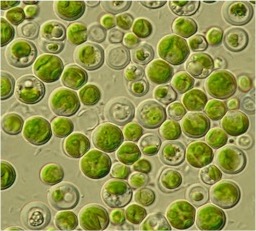
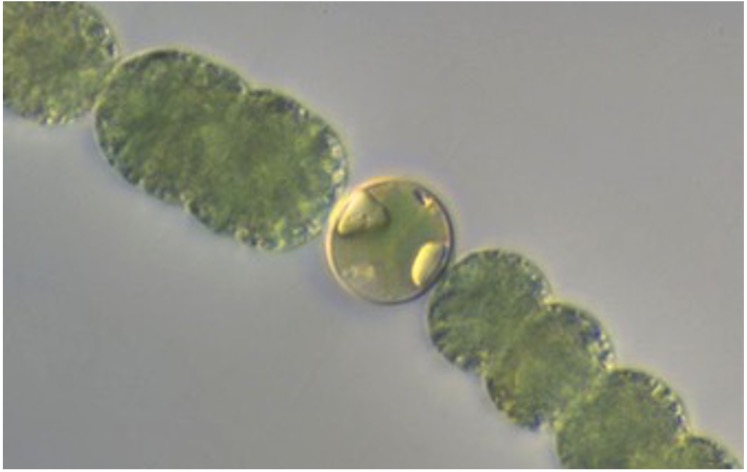
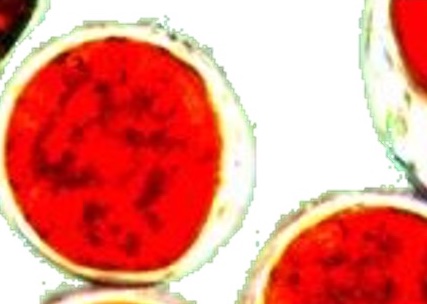
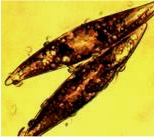
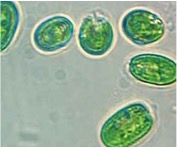
It is worth highlighting in this context that cyanobacteria (prokaryotes) are microorganisms that also fulfil the same characteristics mentioned for microalgae (eukaryotes), so everything discussed about photobioreactors for microalgae cultivation applies equally to microalgae and cyanobacteria.
- Characteristics of microalgae
We will analyse some of the characteristics of microalgae that are most relevant to us and their technical consequences:
- Unicellular photoautotrophic microorganisms
- High biomass generation capacity
- Biomass of complex composition
- High metabolic plasticity
- They absorb inorganic , N (, ) and P () from agricultural or industrial effluents
- They release (relevant in microalgae/bacteria consortia)
- Unicellular photoautotrophic microorganisms
As mentioned, microalgae convert light and into organic biomass. Additionally, they only consume water (), some source of (inorganic) nitrogen, minor amounts of inorganic phosphorus and sulphur, and traces of other nutrients. The process can be summarised in the following figure.
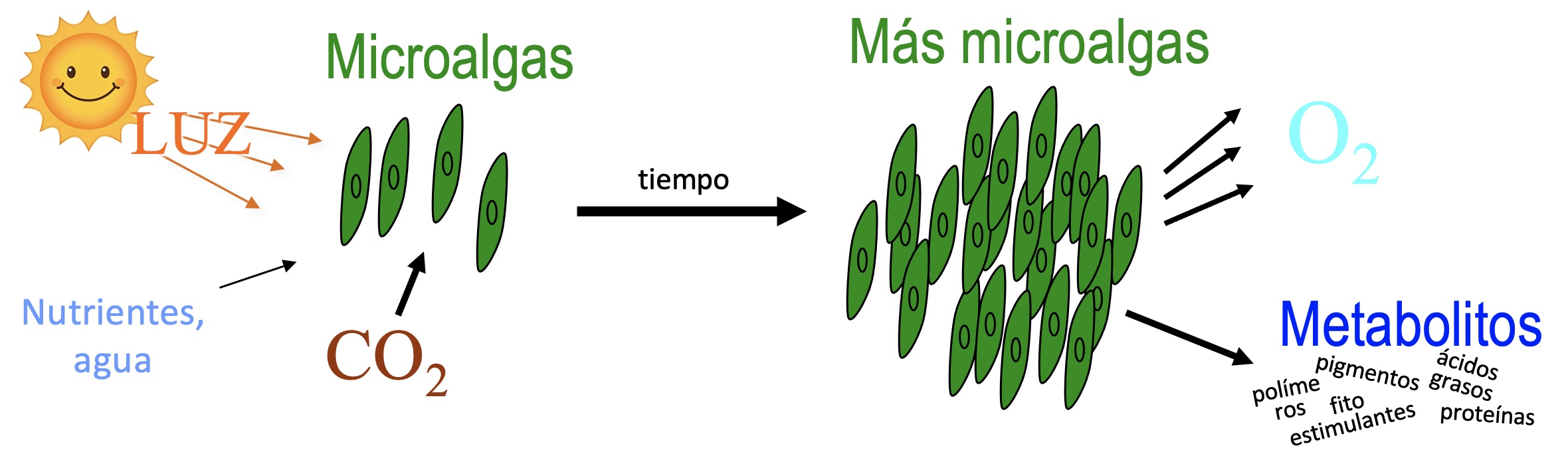
This highlights that microalgae catalyse the conversion of inorganic matter (carbon, water, nitrogen, phosphorus, sulphur...) into organic matter with a higher reduction index and very rich in composition, especially compared to other microorganisms.
Furthermore, growth is rapid. A large amount of biomass is generated in a short time, compared to other photoautotrophic organisms. This gives them a great biomass generation capacity.
- High biomass generation capacity
The ability to reproduce in a short time gives microalgae great biomass generation potential. This characteristic is common to most microorganisms and is a consequence of their structural simplicity (being unicellular). This is illustrated in the following image.
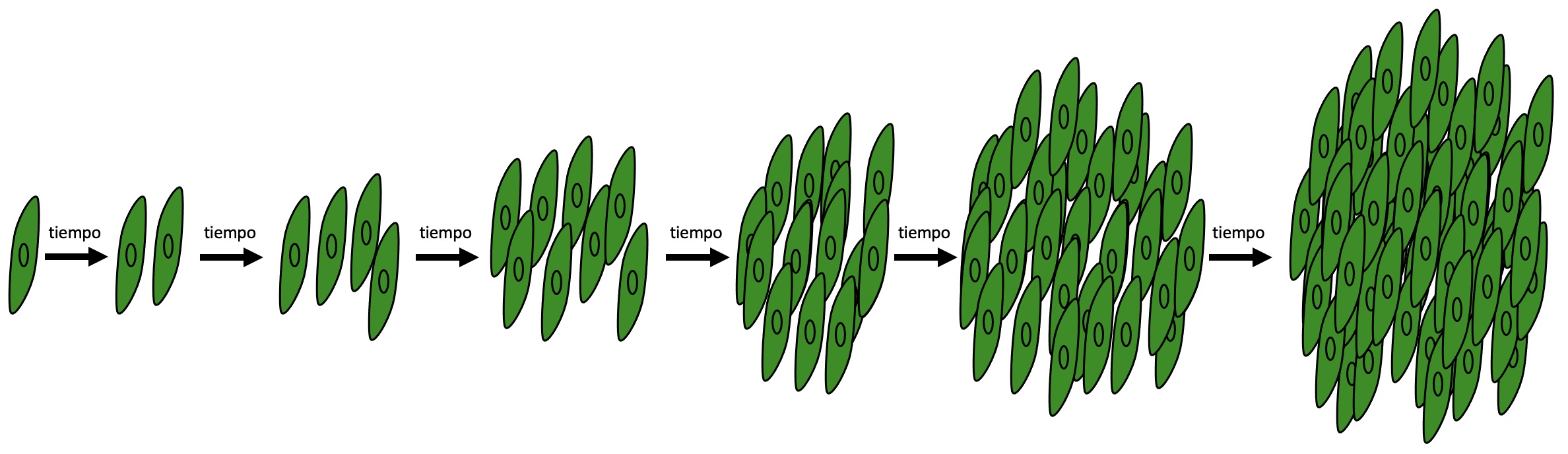
This property finds its quantitative definition in concepts such as doubling time or specific growth rate. Short doubling times, such as those of microalgae, lead to great biomass generation capacity. The opposite is true for higher photosynthetic organisms, such as plants or macroalgae:

From the comparison of both representations, the following points should be clear:
- Microalgae: the short doubling time implies high growth rate
- Microalgae do not need fertile soil
- Microalgae have high photosynthetic efficiency
Microalgae do not need fertile soil. Photobioreactors can be installed in deserts and rocky terrain, to mention a few situations. They can even be cultivated without soil, floating on the sea.
All the biomass in a microalgae culture contains photosynthetic apparatus. There are no structures such as stems, fruits or roots that might receive part of the light without photosynthetically absorbing it.
- Doubling time and specific growth rate
As you can visually verify in the images above, the difference in biomass generation potential lies in the time both organisms take to reproduce (double, if we ignore the death rate for simplicity). This time is called the "doubling time" ().

Visually it is quite obvious that a short doubling time leads to greater biomass generation capacity. Since , microalgae generate biomass faster. However, is not convenient from an engineering point of view. Biomass growth is governed by the following differential equation:
Where expresses the biomass concentration (in , for example). Time is and is the specific growth rate, whose unit is the inverse of time (, for example). depends on the environment and the microorganism. The above equation can be rearranged as:
When is constant, the equation integrates to:
The doubling time concept () can be incorporated into this last equation. Then:
This demonstrates that both concepts are mathematically related in a precise way. The important thing is that is very useful in photobioreactor design (as you will see in Lesson 2), while is easier to understand but less useful.
is easy to correlate with environmental variables, such as substrate concentration ( or [S], or whatever you called it in Bioreactors). In the case of microalgae, we are interested in correlating with the light available for photosynthesis .
Biomass generation and productivity
This can be expressed mathematically. Observing the evolution of for microalgae (or plants or any organism) in the absence of limitation, a relationship such as the following is observed:
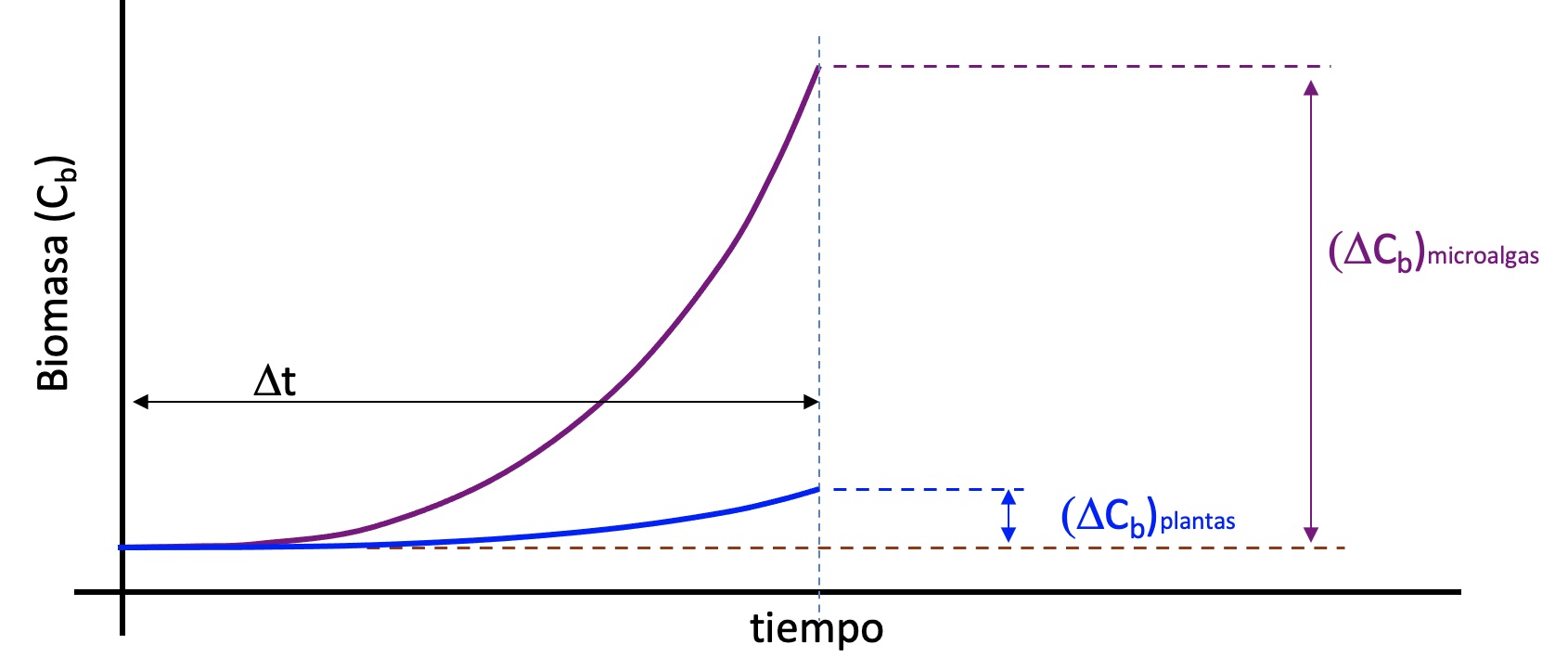
That is, a higher implies a greater biomass production capacity. This production capacity is called PRODUCTIVITY and is represented by . Productivity has dimensions of g/(), for example. The definition of productivity is as follows:
Rearranging equation (1):
We can see that productivity is:
That is, to achieve high productivity, high biomass concentration and high specific growth rate must coexist. In the cultivation of non-photosynthetic microorganisms, both variables and can be maximised separately, since the substrate concentration ( or [S]), which is the parameter that usually controls , can be adjusted independently. However, in microalgae cultivation, high and high are in conflict for the following reasons:
- To obtain high , high (photosynthetic light availability) is required.
- To obtain high , must be low, since biomass prevents light from entering and therefore high implies low .
- It is impossible to simultaneously have high and high .
Therefore, to optimise in a photobioreactor, an intermediate point must be found at which the product is maximum. This is what will occupy us for much of the course.
- Production of medium and high-value biomass and products
Although the main concern in photobioreactor design is to maximise biomass productivity, it is necessary to recognise that microalgae contain a large number of biomolecules of interest (generally, because they are expensive) and it is useful to know what conditions maximise the content of these substances in microalgal biomass, in order to maximise production. Similarly, other applications, such as wastewater treatment, may require something beyond maximum biomass production.
For this reason, we must be familiar with the potential applications of microalgae. By way of illustration and without claiming to be exhaustive, we can list the following:
- Protein production (SCP)
- Biomass for aquaculture
- Human food and animal feed
- Chelating capacity: bioremediation
- Polyunsaturated fatty acids
- Pigments: chlorophylls, carotenoids, phycobiliproteins
- Bioactive compounds: antifungals, insecticides, phytostimulants
- absorbers from exhaust gases
- Treatment of wastewater, industrial effluents and greenhouse waste
- Production of biofertilisers
- Biofuels and biogas
- Molecules labelled with and
- Circular economy
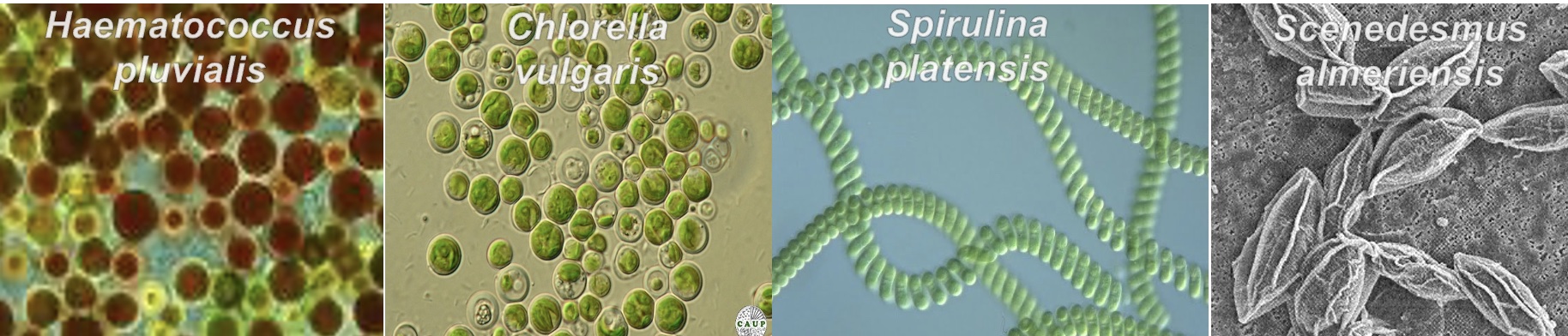
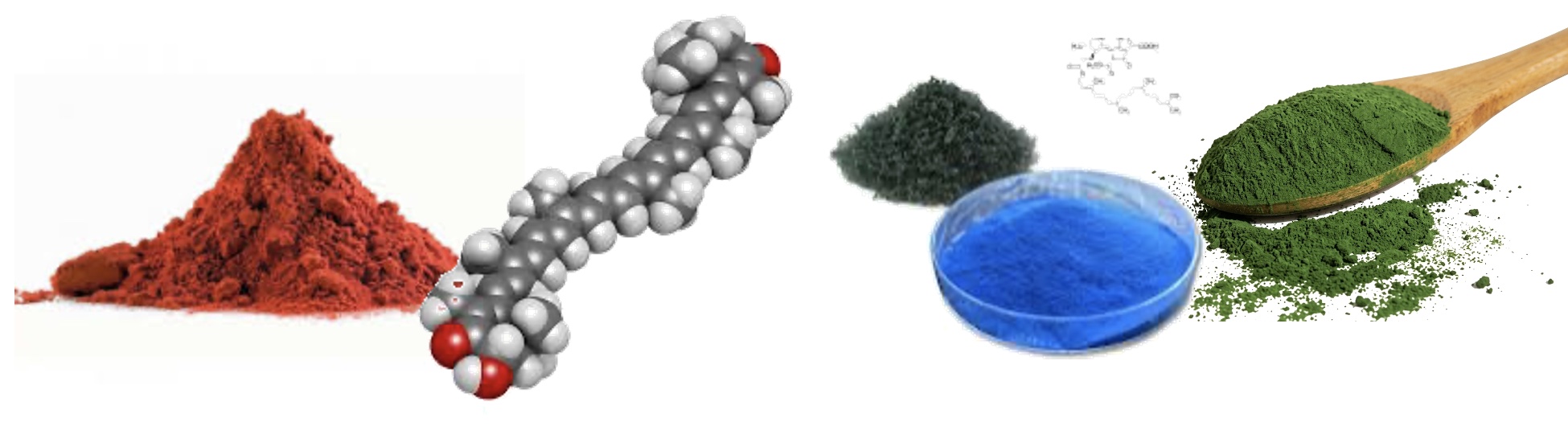
A wide variety of microalgae are suitable for producing different substances. For example, Haematococcus pluvialis under stress conditions (nitrogen deprivation and high irradiance) accumulates up to 5% by weight of the carotenoid astaxanthin. Scenedesmus almeriensis produces the carotenoid lutein, while Spirulina platensis (a cyanobacterium) produces the fluorescent pigments phycocyanin and phycoerythrin.
Moreover, many microalgae display METABOLIC PLASTICITY: the ability to adapt their composition in response to environmental changes. Some examples of metabolic plasticity are:
- Accumulation of carotenoids under light stress conditions
- Increase in lipid content under nitrogen deprivation
- Excretion of exopolysaccharides into the medium under hydrodynamic stress
- Accumulation of chlorophylls under low light conditions
The consequence is that the productivity of a given product can be greatly increased by appropriately choosing cultivation conditions, even if this slightly reduces biomass productivity relative to the optimum.
- Microalgae, sustainable processes and circular economy.
Microalgae-based processes, and indeed any other process today, are no longer designed to obtain a single substance (for example, lutein, astaxanthin or some fatty acid). These substances may be present in amounts of 1–5%, and so they are accompanied by a large amount of waste by-products which, in modern processes, must be valorised. These considerations give rise to the concepts of integrated processes and biorefineries.
- Biorefinery: comprehensive, sustainable and synergistic processing of biomass for its transformation into a spectrum of marketable bioproducts (foods, feeds, chemicals, materials) and bioenergy (biofuels, electricity and thermal heat).
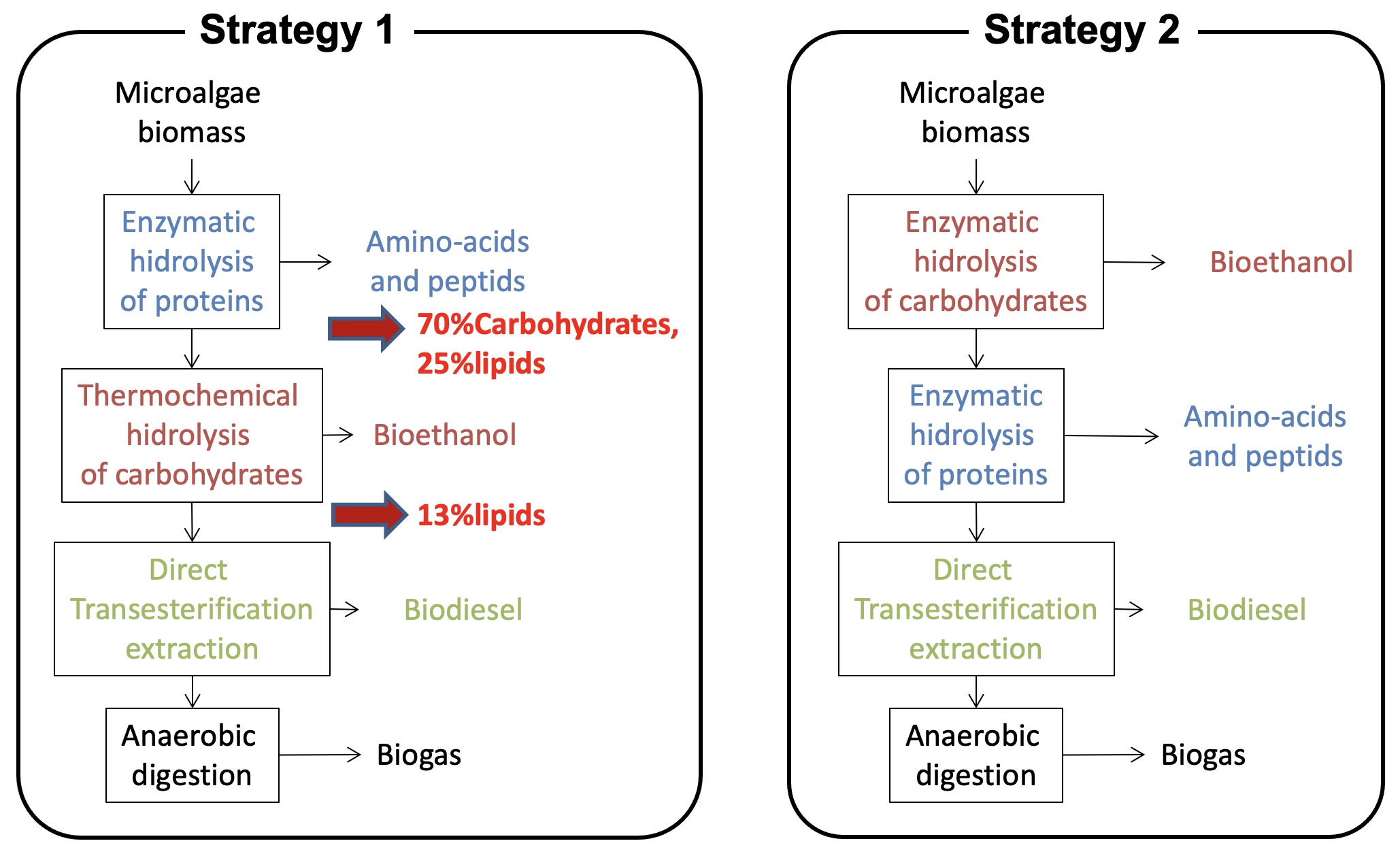
Another category particularly well suited to microalgae is waste valorisation processes, which use waste such as urban wastewater or agricultural and industrial effluents as raw material, and convert them into products such as biomass, biofertilisers or biogas.
- Waste valorisation is the set of operational, industrial, chemical or biological operations whose main objective is to give a waste a new economic value or functional utility, transforming it into a secondary resource that replaces virgin raw materials or conventional energy sources.
Finally, it is worth noting that microalgae are a key element in the circular economy. The circular economy is a model of production and consumption designed to minimise the extraction of raw materials and the generation of waste. Its main objective is to keep materials, products and resources within the economic cycle for as long as possible, extending their useful life and creating continuous added value.
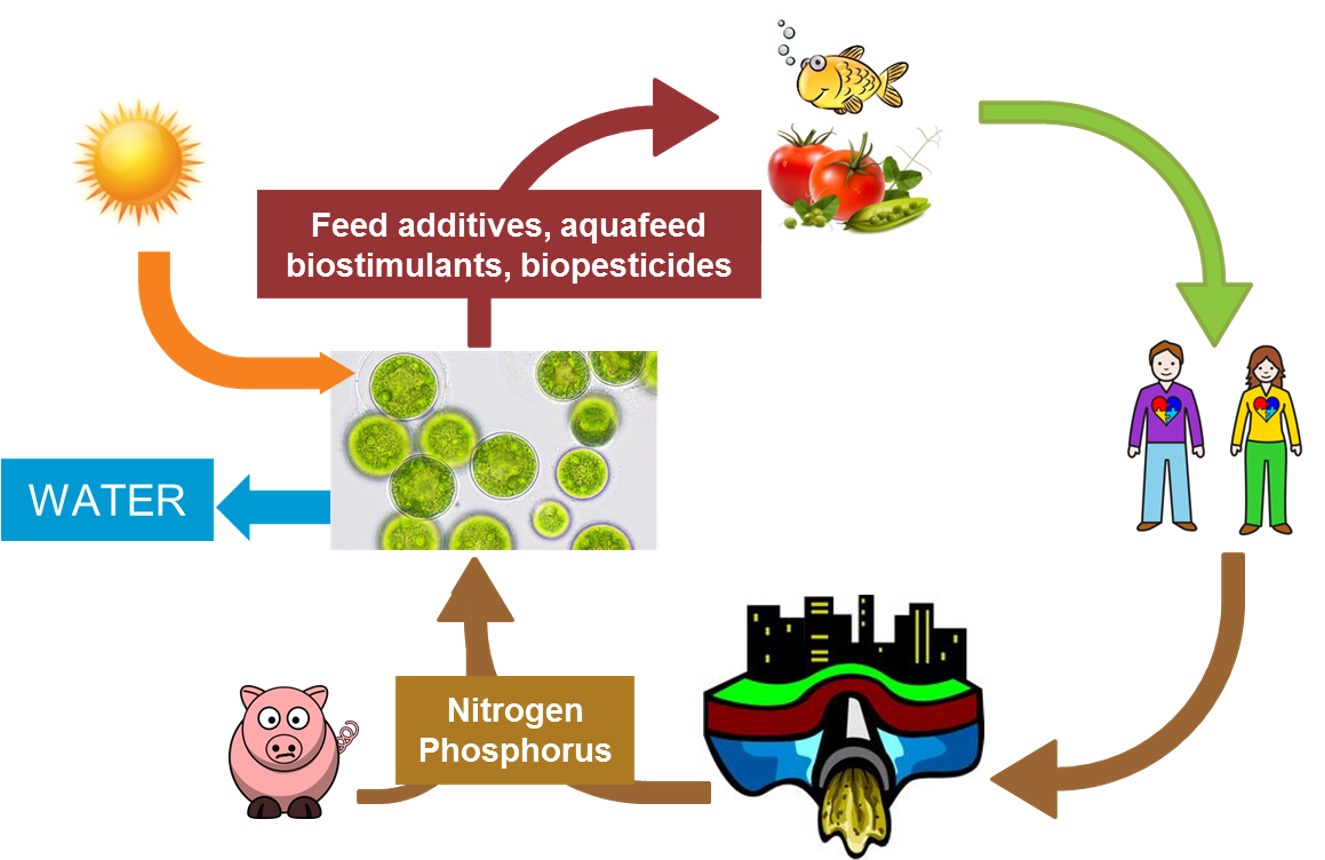
As an example, microalgae can be cultivated using slurry or urban wastewater as the culture medium. In this way, the nitrogen and phosphorus present, which would normally be lost through denitrification or discharged, are recovered and incorporated into the microalgal biomass.
In contrast, the linear economy (the traditional model) follows the "extract, manufacture, use and discard" pattern and is based on the (unsustainable in the long term) premise that we have infinite, cheap and easily accessible resources.
Therefore, the use of these practices allows savings in nitrogen fertilisers and with them the immense amount of energy consumed by the Haber process. It is also possible to recover a large part of the phosphorus (P), which is an even greater problem than nitrogen (N), since phosphorus comes from finite mining resources (phosphate rock) under intense exploitation.
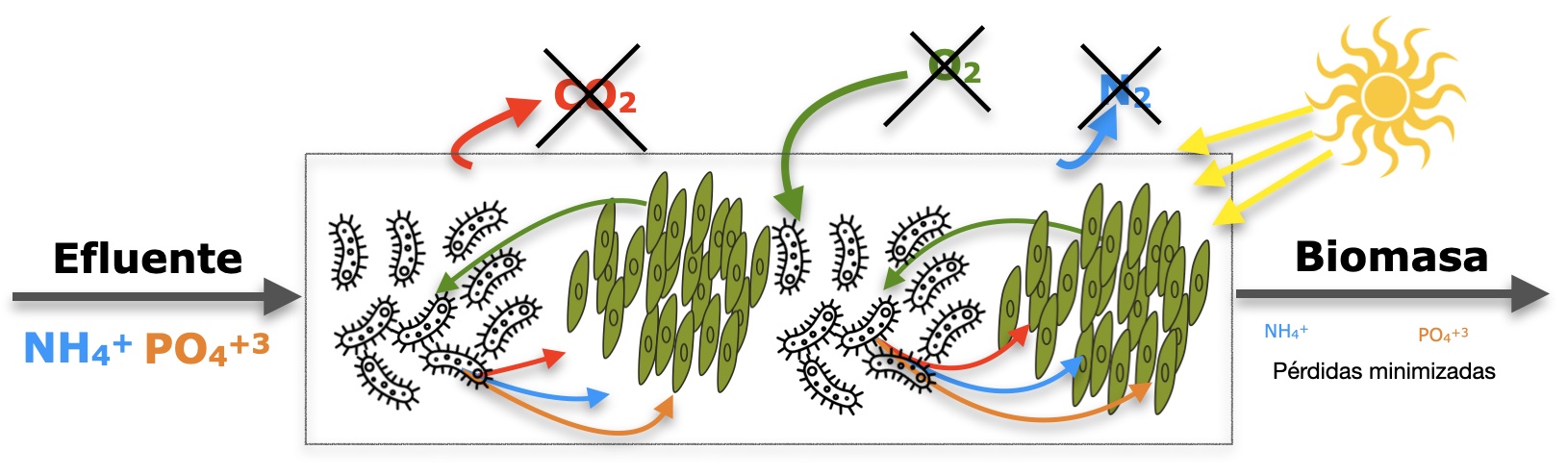
Furthermore, microalgae provide to the bacteria that degrade organic matter and recapture the that bacteria release from organic matter. In this way, , instead of returning to the atmosphere, is stored as biomass which, in addition to biofertilisers, can be converted into biofuels (biodiesel or bioethanol) or biogas.
- Summary
Microalgae are unicellular photoautotrophic microorganisms that convert light and into organic biomass. Their structural simplicity gives them very short doubling times (high specific growth rate ), which translates into great biomass generation capacity.
Productivity () depends on the balance between growth rate and biomass concentration. In photobioreactors there is an inherent conflict: high requires high irradiance (low ), while high reduces . Optimising requires finding the point where is maximum.
Microalgae display metabolic plasticity: they adapt their composition in response to environmental changes (accumulation of lipids, carotenoids, polysaccharides), allowing the production of high-value compounds to be maximised through control of cultivation conditions.
They are key to the circular economy and biorefineries: they valorise waste (wastewater, agricultural effluents), recover nutrients (N, P), provide to bacterial consortia, recapture , and generate multiple products (proteins, pigments, lipids, biofertilisers, biofuels).
